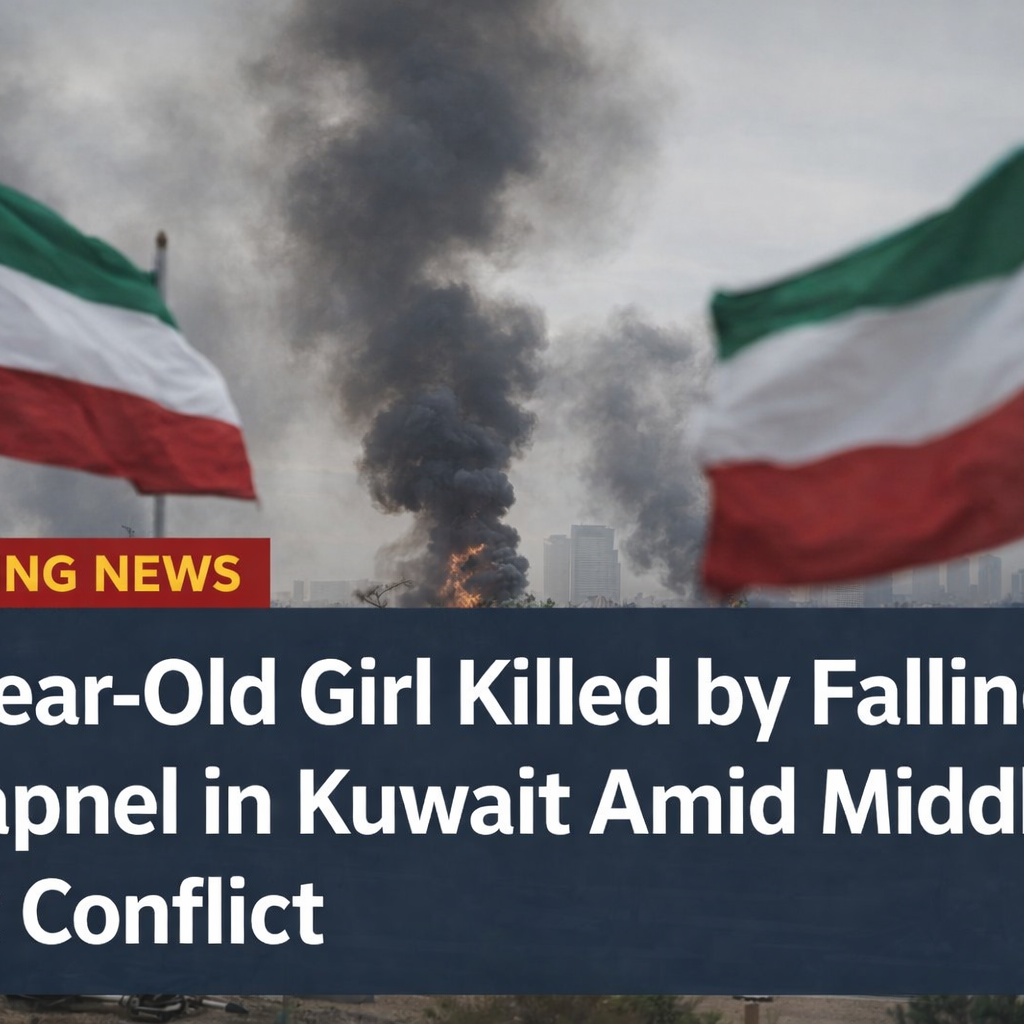
An 11-year-old girl tragically lost her life in Kuwait City after being struck by falling shrapnel during ongoing tensions in the Middle East, Kuwait’s Health Ministry confirmed on Wednesday, March 4, 2026. The girl, who has not been publicly identified, was hit when fragments from intercepted aerial projectiles fell into a residential area of the capital, underscoring how civilian areas can be affected by broader regional military actions.
The incident occurred as waves of military activity linked to the escalating conflict between Iran and the United States and Israel shook the Gulf region. Kuwait is located close to several military bases used by U.S. forces and allies, making it a key strategic location amid the hostilities.
Details of the Tragic Incident
According to the Health Ministry’s statement, the girl was struck by falling shrapnel in a residential neighbourhood while Kuwait’s defence forces were engaged in intercepting what were described as hostile aerial threats overhead. Emergency crews responded quickly and transported her to Al-Amiri Hospital in critical condition.
Doctors and paramedics continued to perform resuscitation efforts, both in the ambulance and at the hospital, for nearly 30 minutes. Despite their best efforts, the young girl died from her injuries later in the day, the ministry confirmed.
In the same incident, four members of her family, including her mother, suffered injuries and were taken to the hospital for treatment and observation. Health officials said they remain under medical care to ensure their condition is stable and monitored.
Context of the Broader Gulf Conflict
The tragic death comes amid a surge in military activity across the Middle East. On February 28, 2026, the United States and Israel launched a coordinated military campaign against strategic sites in Iran. Iran responded with barrages of missiles and drones across the Gulf region including into countries such as Saudi Arabia, Qatar, the United Arab Emirates, and Kuwait.
In many cases, Kuwaiti and other Gulf nations’ air defence systems detected and intercepted incoming aerial threats. While interceptions can protect populations from direct impacts, they can also cause debris fragments of intercepted missiles or drones to fall onto populated areas far from the original targets.
Authorities in Kuwait and across the region have repeatedly emphasised that defensive measures remain necessary to protect civilians, but these systems are not flawless and can still pose risks to people on the ground.
Regional and International Reactions
News of the girl’s death prompted swift reactions from officials and residents. Government authorities expressed deep sorrow and extended condolences to the grieving family. Community leaders in Kuwait highlighted the tragedy as a stark reminder of how civilians especially children can suffer during military conflicts even when they are far from front lines or official combat zones.
The incident has also drawn international concern, with foreign governments and organisations urging all parties to avoid actions that could further endanger innocent lives and to pursue diplomatic solutions to de-escalate tensions. Analysts say that civilian casualties can increase pressure on world leaders to seek negotiated resolutions and to limit the geographic spread of hostilities.
Impact on Daily Life in Kuwait
Beyond the immediate tragedy, the broader conflict has affected everyday life in Kuwait and neighbouring Gulf nations. Commercial air travel has been disrupted in parts of the region as countries close or restrict their airspace due to security concerns. Many residents report anxiety over safety, and both citizens and expatriates are closely monitoring developments as they unfold.
Schools, public services and business operations have seen intermittent interruptions as authorities weigh precautions against continuing normal activities. While many Kuwaitis are determined to carry on with daily routines, the fear of further aerial incidents remains palpable.
Human Cost of the Conflict
The death of an 11-year-old child underscores the far-reaching consequences of modern conflicts. Even when nations deploy advanced military technology, the fallout can affect the most vulnerable including families and children who have no role in the hostilities. Experts say that such incidents can occur when missiles or drones are intercepted or detonate in the air, causing debris to fall over wide areas, including residential districts.
While Kuwait continues defensive operations to intercept threats and protect its people, the tragic loss highlights the ongoing danger that conflict, even indirect, poses to ordinary citizens.
Looking Ahead
Officials in Kuwait have stated that they will continue to monitor developments closely. Residents are urged to follow advice from authorities, stay aware of official announcements and remain vigilant. As regional powers pursue both military and diplomatic paths in response to the conflict, hopes for de-escalation remain, driven in part by the awareness of the human cost of continued hostilities.
Source: Khaleej Times