NASA is preparing for a historic milestone in space exploration as it targets April 1 for the launch of Artemis II, the first crewed mission to the Moon in more than 50 years. The mission represents a significant step forward in the United States’ long-term strategy to establish a sustained human presence on the Moon and eventually send astronauts to Mars.
Unlike the iconic Apollo missions that placed astronauts on the lunar surface, Artemis II will be a flyby mission designed to test systems and technologies required for future lunar landings. Four astronauts will travel around the Moon and return safely to Earth, paving the way for a human landing currently planned later this decade.
The mission follows the success of Artemis I, an uncrewed test flight completed in 2022. Artemis II will evaluate the performance of NASA’s advanced Orion spacecraft and the powerful Space Launch System (SLS) rocket, both developed to support deep-space exploration missions.
What is Artemis II and why does it matter?
Artemis II is the first crewed mission in NASA’s Artemis programme, which aims to bring humans back to the Moon and build a sustainable presence there. The broader vision includes creating a lunar base that can support scientific research, resource utilisation, and technology development needed for future missions to Mars.
The Moon is seen as a critical testing ground for deep space exploration. By returning astronauts to lunar orbit, NASA hopes to better understand how humans can live and work in environments far from Earth for extended periods.
The mission is considered a crucial step toward a planned lunar landing targeted for 2028. Beyond scientific exploration, the Artemis programme is expected to strengthen international cooperation and expand commercial opportunities in space.
Who are the astronauts on board?
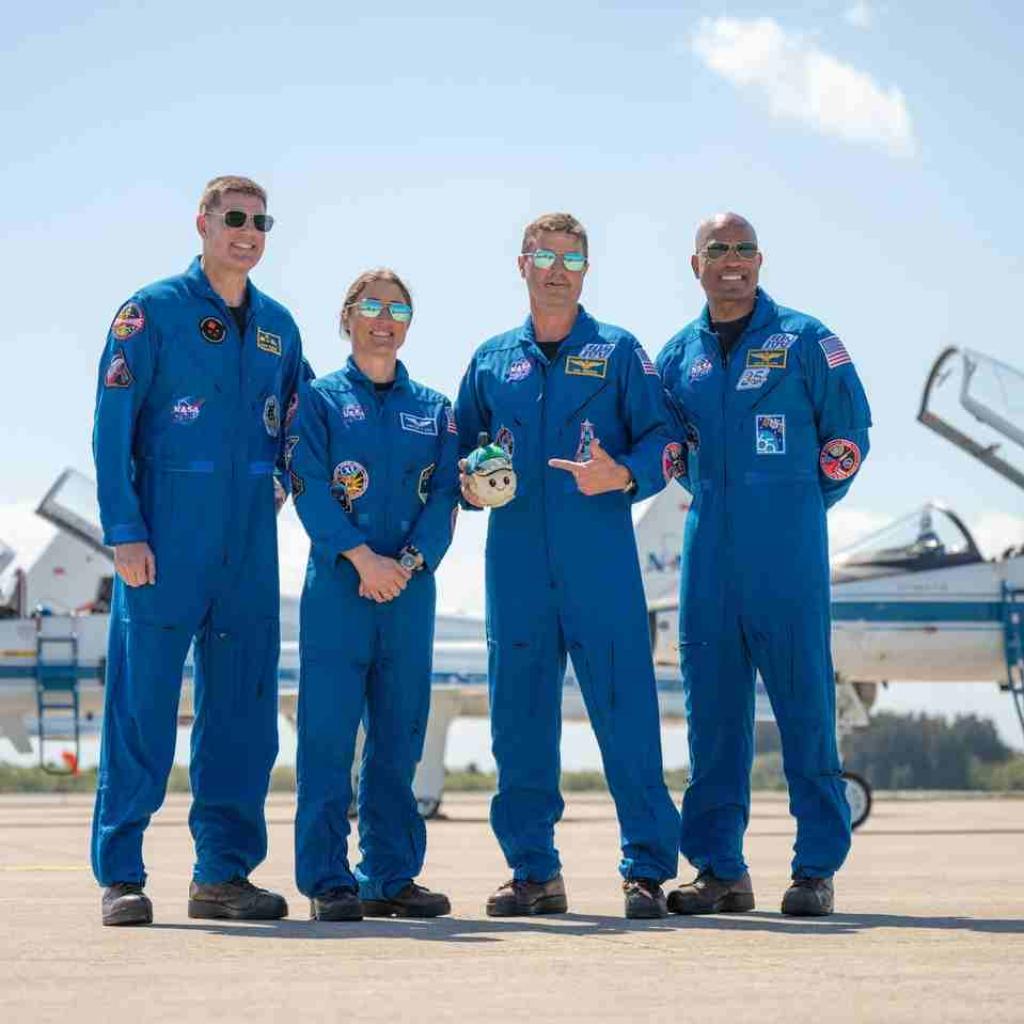
The Artemis II crew consists of four astronauts representing both experience and diversity:
- Reid Wiseman (commander)
- Victor Glover (pilot)
- Christina Koch (mission specialist)
- Jeremy Hansen (mission specialist, Canada)
The mission will mark several historic milestones. It will be the first time a woman, a Black astronaut, and a Canadian astronaut travel to the Moon. The crew members bring extensive experience from previous space missions and training in engineering, aviation, and science.
What will the mission actually do?
Although Artemis II will not include a lunar landing, the mission is designed to test key systems required for future exploration missions.
- Enter Earth orbit and test spacecraft systems
- Conduct safety checks and simulate docking manoeuvres
- Travel toward the Moon and fly over its far side
- Carry out experiments and observations
During the journey, the Orion spacecraft will travel farther from Earth than any human mission since Apollo 13 in 1970. When the spacecraft moves behind the Moon, communication with Earth will temporarily be lost, creating one of the mission’s most dramatic moments.
The astronauts will conduct a range of experiments and observations that will help scientists better understand deep space conditions and prepare for future missions.
How will the spacecraft travel and return?
After liftoff, the Orion spacecraft will first orbit Earth while engineers carefully monitor its systems. If everything performs as expected, the spacecraft will then begin its journey toward the Moon.
The mission will use a “free-return” trajectory, meaning the Moon’s gravitational pull will naturally guide the spacecraft back toward Earth. This path increases safety by allowing the spacecraft to return even if propulsion systems experience issues.
Re-entry into Earth’s atmosphere is considered one of the most challenging parts of the mission. The Orion capsule will experience extremely high temperatures as it travels at high speed before deploying parachutes for a controlled splashdown in the Pacific Ocean.
What are the risks involved?
Despite extensive preparation, Artemis II carries inherent risks. Orion has never carried humans before, making this a critical test of the spacecraft’s safety systems.
“We don’t accept anything less than perfect, otherwise we’re accepting greater risk,” said NASA’s former chief astronaut Peggy Whitson.
“...we have to live with that knowledge, because of our space flight history, that when accidents happen, people will die,” she said.
NASA engineers have made improvements following the Artemis I mission, including adjustments to the spacecraft’s heat shield after engineers observed unexpected wear during re-entry.
Key facts about Artemis II
- First crewed Moon mission since Apollo era
- Launch possible as early as April 1
- Four astronauts on a 10-day mission
- No landing - lunar flyby only
- Orion spacecraft’s first human flight
- Uses NASA’s SLS rocket (98 metres tall)
- Part of broader plan for Moon base and Mars missions
- Lunar landing targeted for 2028
How does this compare to the Apollo missions?
Artemis II shares similarities with Apollo 8, the 1968 mission that carried astronauts around the Moon without landing. However, the Artemis programme is more complex and collaborative, involving international partners and private companies.
Companies such as SpaceX and Blue Origin are working on technologies that will support future lunar landings. Their involvement highlights the growing role of commercial partnerships in modern space exploration.
Is there a new space race underway?
Global interest in lunar exploration has increased significantly in recent years. China has announced plans to land astronauts on the Moon by 2030, increasing competition in space technology and research.
Scientists are particularly interested in the Moon’s south pole, where frozen water and other valuable resources may exist. These resources could support future human missions and even help produce fuel for deeper space travel.
Why is the timeline under scrutiny?
NASA aims to achieve a human lunar landing by 2028, but the timeline depends on the successful development of critical technologies, including lunar landers and life-support systems.
The Artemis programme has faced technical challenges, budget pressures, and delays, raising questions about whether the timeline can be maintained. However, NASA officials remain confident that Artemis II will provide the data needed to move forward safely.
If successful, Artemis II will mark a major milestone in humanity’s return to deep space exploration and lay the foundation for future missions beyond the Moon.
Source : Gulf News