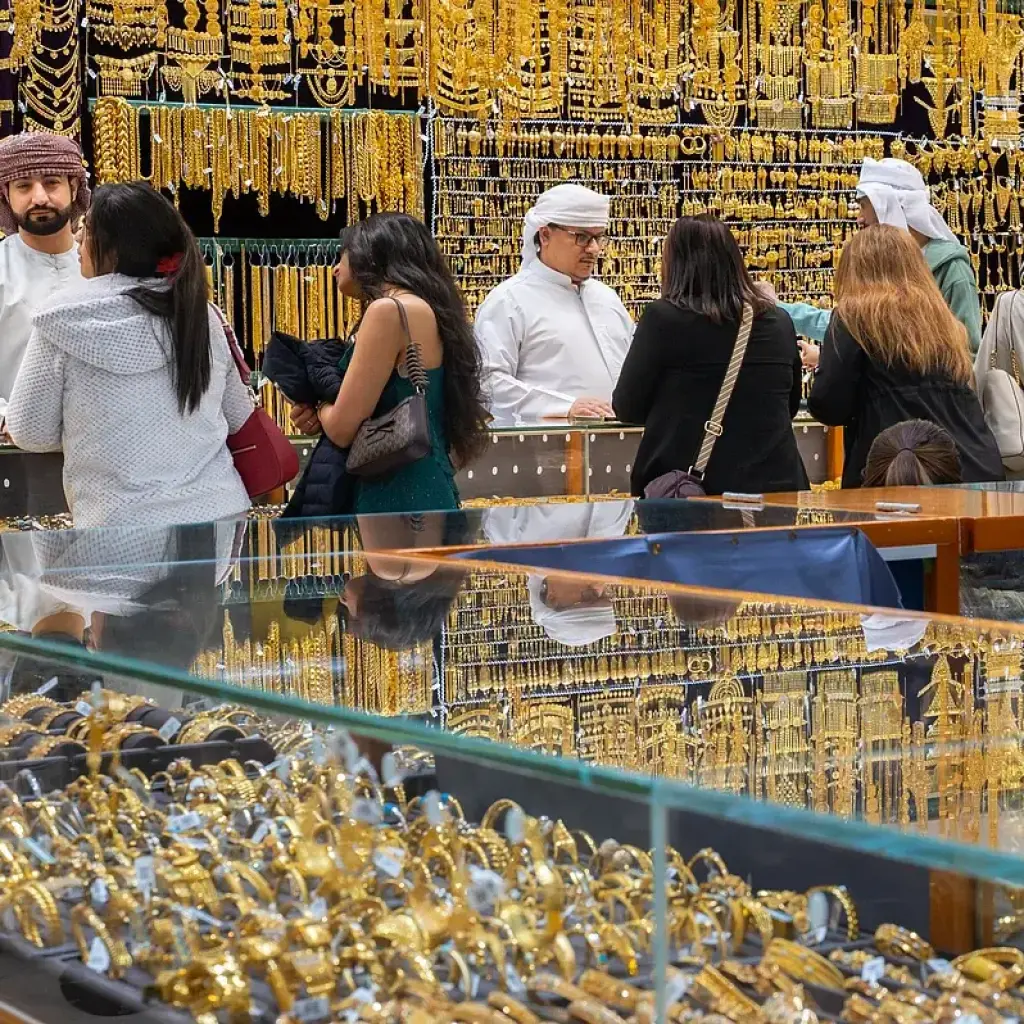
Gold prices in Dubai showed signs of recovery early Tuesday, registering a modest increase after experiencing a significant correction throughout March. The rebound suggests renewed buying interest as investors and consumers return to the market following a period of falling prices.
As of 8:40 am, the price of 24K gold in Dubai stood at Dh549, rising from Dh541.75 recorded a day earlier. Meanwhile, 22K gold increased to Dh508.50 compared to Dh501.50 previously. The gradual upward movement indicates that the market may be stabilising after weeks of downward pressure that pushed prices to multi-week lows.
Gradual climb
Gold prices started March at relatively high levels, with 24K gold trading above Dh640 in early weeks of the month. However, the market soon experienced a steady decline, with prices slipping from above Dh600 to the mid-Dh500 range within a short period.
The downward trend became more noticeable during the second half of March as selling pressure increased across global markets. Prices dropped further to around Dh528 on March 24 and hovered between Dh529 and Dh530 for a brief period. A temporary recovery pushed prices closer to Dh545, but another dip brought rates back down to the low Dh540 range at the beginning of this week.
The recent increase to Dh549 reflects a recovery from those lows, although prices still remain considerably lower than the peak levels seen earlier in March. Market analysts believe that this gradual recovery is supported by renewed interest from investors looking to take advantage of relatively lower price levels.
“Downside risks to global growth from elevated oil prices are becoming more pronounced, which could revive defensive positioning and support bullion despite the rate environment.”
-Tony Sage, CEO of Critical Metals
Global cues drive sentiment shift
Global economic conditions and geopolitical developments continue to play a key role in shaping gold price movements. International markets have seen gold extend its gains after indications that the United States may attempt to de-escalate tensions with Iran without reopening the Strait of Hormuz. This has eased some immediate concerns but has not fully removed uncertainty in global markets.
Gold is widely considered a safe-haven asset, meaning investors often turn to it during times of geopolitical instability or economic uncertainty. The ongoing tensions in the Middle East, along with fluctuations in oil prices, have encouraged investors to reassess their positions in the precious metal.
Additionally, recent signals from the US Federal Reserve suggesting a pause in interest rate decisions have also supported gold prices. Typically, higher interest rates make gold less attractive because the metal does not generate interest income. When expectations of rate hikes decrease, gold tends to become more appealing to investors.
Tony Sage, CEO of Critical Metals, noted that the latest price recovery reflects renewed investor confidence after the earlier correction.
“Gold prices extended their rebound at the start of the week, stabilising after a recent corrective phase. The persistence of geopolitical risk in the Middle East could underpin safe-haven demand, particularly after the metal’s correction during the first part of this month, fueling dip-buying.”
He further explained that rising oil prices and concerns about global economic growth could increase demand for gold as a protective investment.
“Downside risks to global growth from elevated oil prices are becoming more pronounced, which could revive defensive positioning and support bullion despite the rate environment.”
Short-term pressure still in play
Despite the current recovery, gold prices may continue to face short-term pressure from broader financial market conditions. Central bank actions and currency movements remain important factors influencing the metal’s direction.
“At the same time, gold could remain vulnerable in the short term amid the risk of more central-bank selling, after Turkey’s central bank offloaded a significant amount, and a potential increase in Treasury yields and the dollar. ETF flows remained negative overall and could weigh on the market if the trend continues,” Sage said.
These developments indicate that although gold prices are recovering, the market remains sensitive to economic signals and policy changes across major global economies.
What to watch next
Market participants are closely monitoring several factors that could influence gold prices in the coming weeks. Geopolitical developments, particularly in the Middle East, continue to create uncertainty that may drive safe-haven demand.
“Looking ahead, gold’s trajectory will likely hinge on the developments in the Middle East, inflation expectations, and the evolution of monetary policy, in addition to the potential impact of elevated oil prices on the global economy. Upcoming US economic data could also affect sentiment and drive gold prices as they influence monetary policy expectations.”
Inflation data, central bank decisions, and global economic indicators will likely determine whether gold continues its upward momentum or faces renewed pressure.
For now, the modest recovery near Dh550 suggests that the market may be attempting to stabilise after a volatile month, offering cautious optimism for both investors and jewellery buyers in Dubai.
Source : Gulf News