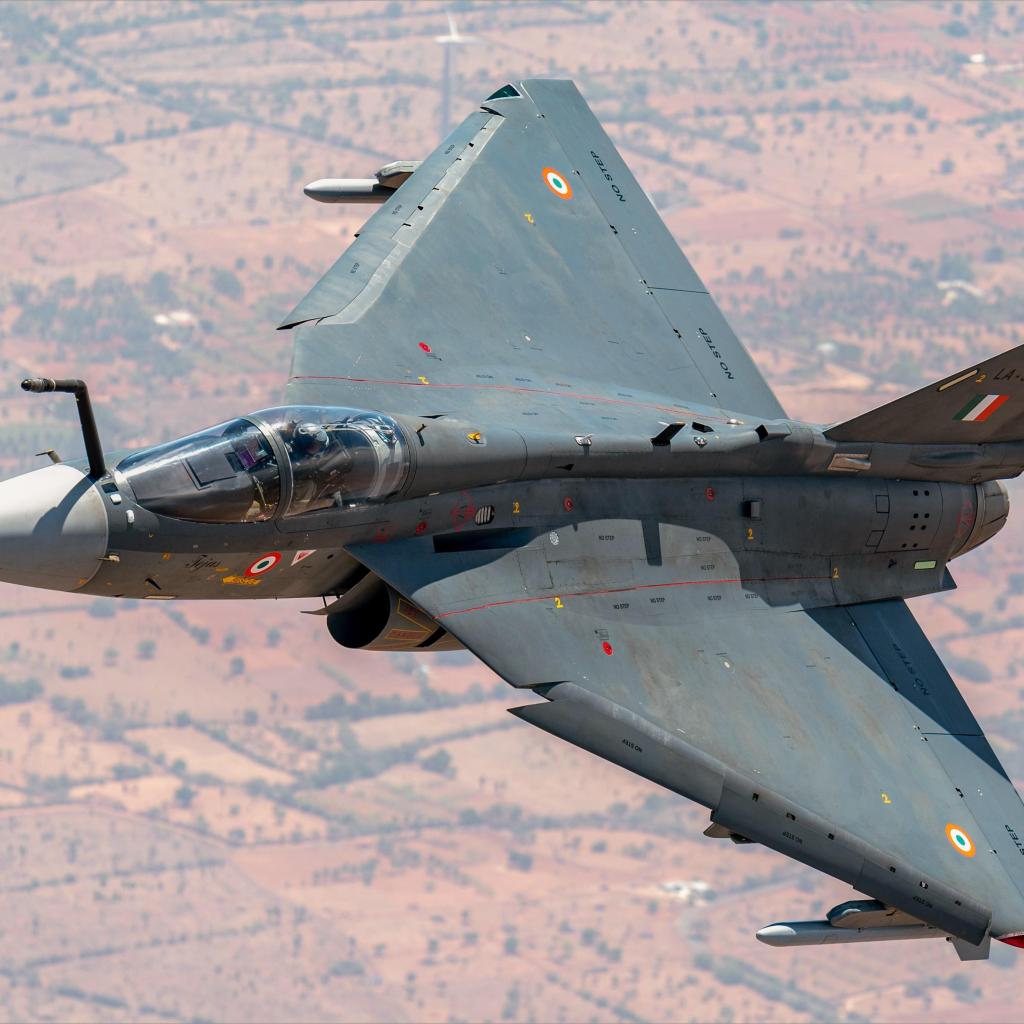
New Delhi: A Tejas light combat aircraft of the Indian Air Force (IAF) suffered significant airframe damage after it overshot the runway at a frontline airbase earlier this month, raising fresh concerns over the indigenous fighter programme. According to sources who spoke to PTI on Sunday, the incident is suspected to have been caused by a brake failure or a malfunction in onboard systems during landing.
The accident reportedly occurred on February 7 during a routine training sortie. While attempting to land, the aircraft was unable to decelerate adequately and overshot the runway, resulting in substantial structural damage. Fortunately, the pilot ejected safely and escaped without serious injuries. The aircraft, however, sustained severe damage to its airframe and is unlikely to return to service anytime soon.
IAF Grounds Entire Tejas Fleet
In the aftermath of the incident, the Indian Air Force has temporarily grounded its entire fleet of nearly 30 single-seat Tejas fighter jets as a precautionary measure. The decision was taken to enable comprehensive technical inspections and system checks across all operational aircraft.
Sources indicated that teams of engineers and technical experts have been tasked with examining critical systems, particularly braking mechanisms and related onboard components, to determine whether the issue was isolated or indicative of a broader technical flaw. The grounding is seen as a standard safety protocol aimed at ensuring operational readiness and preventing similar occurrences.
The IAF has yet to issue an official public statement detailing the findings or the expected timeline for the fleet’s return to service. However, officials suggest that the grounding will remain in place until a clear understanding of the cause is established and necessary corrective actions are implemented.
Third Crash Reported for Tejas Fleet
This marks the third accident involving the indigenously developed Tejas fighter aircraft, adding to the scrutiny surrounding the programme. The first crash occurred near Jaisalmer in March 2024, when the pilot managed to eject safely without sustaining injuries.
The second incident took place during an aerial display at the Dubai Airshow in November 2025. On that occasion, the aircraft crashed during a demonstration flight, resulting in the death of the pilot. Investigations into the Dubai Airshow crash are still ongoing, with authorities examining flight data and technical parameters to ascertain the exact cause.
While three incidents over several years do not necessarily define the overall safety record of a fighter fleet, the latest accident comes at a sensitive time for the Tejas programme, particularly as India seeks to expand and modernize its air combat capabilities.
Delays Hit Tejas Mk1A Deliveries
The most recent mishap also comes amid delays in the Tejas Mk1A programme. Hindustan Aeronautics Ltd (HAL), the state-run aerospace manufacturer responsible for producing the aircraft, has missed multiple delivery deadlines for the upgraded Mk1A variant. The primary reason cited for the delay has been engine supply constraints from GE Aerospace.
In February 2021, India’s Defence Ministry signed a ₹480 billion contract with HAL for 83 Tejas Mk1A jets. The Mk1A version is equipped with advanced avionics, improved radar systems, enhanced electronic warfare capabilities, and other performance upgrades over earlier variants. A subsequent deal worth ₹623.7 billion was signed in September 2025 for an additional 97 aircraft.
Despite firm orders for 180 Mk1A fighters, deliveries are reportedly running nearly two years behind schedule. The delays have implications for the IAF’s squadron strength, which has been under pressure due to the phased retirement of older aircraft such as the MiG-21 fleet. The Tejas Mk1A is intended to form a critical component of India’s air defence strategy and to bolster the IAF’s operational capabilities along sensitive borders.
Tejas: Versatile Multi-Role Combat Capabilities
The Tejas is a single-engine, multi-role fighter aircraft designed to perform air defence, maritime reconnaissance, and precision strike missions. Developed by the Aeronautical Development Agency, the aircraft represents a significant milestone in India’s indigenous defence manufacturing efforts.
Built to operate in high-threat environments, the Tejas features advanced fly-by-wire controls, composite airframe structures, and modern avionics systems. The Mk1A variant further enhances combat survivability with improved radar warning receivers, electronic countermeasures, and beyond-visual-range missile capabilities.
The programme has long been seen as a cornerstone of India’s push for self-reliance in defence production. However, recurring delays and recent accidents have intensified debate over production timelines, quality assurance processes, and supply chain management.
As investigations into the latest runway overshoot continue, the IAF’s immediate priority remains ensuring flight safety and restoring confidence in the fleet. The coming weeks are likely to be crucial in determining both the technical findings and the broader implications for India’s ambitious fighter modernisation plans.
Source: Gulf News
Image source: Wikipedia