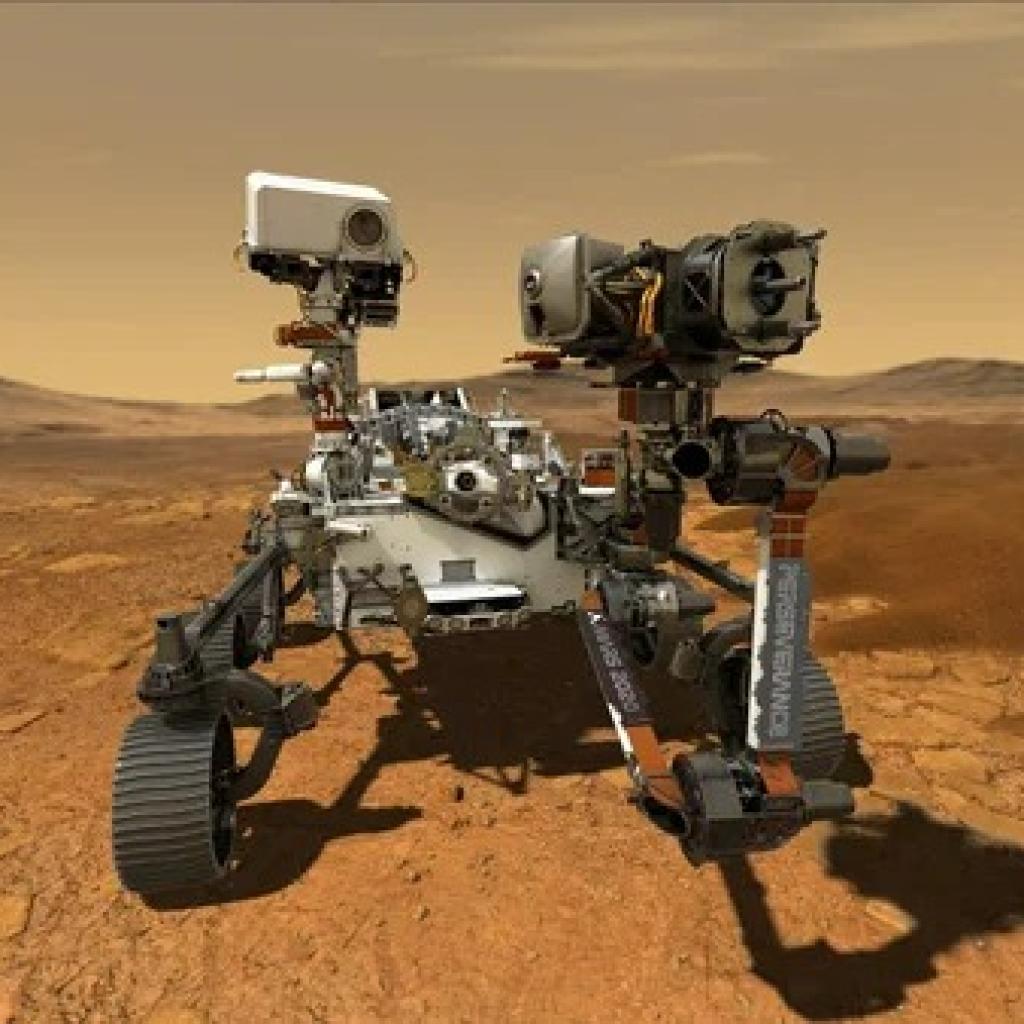
A groundbreaking discovery by NASA’s Curiosity rover has added a new layer of intrigue to the search for life beyond Earth. Scientists announced on Tuesday that the rover has identified additional building blocks of life on Mars through a chemistry experiment never before attempted on another planet.
While the findings are exciting, researchers have cautioned that these organic molecules do not serve as direct evidence of past life. Instead, they highlight that such compounds could have formed naturally on Mars or arrived via meteorites striking the planet. Nevertheless, the discovery confirms that crucial chemical traces have remained preserved on the Martian surface for over three billion years.
During that ancient period, Mars is believed to have had a vastly different environment compared to its current cold and dry state. Scientists suggest that the planet once hosted large lakes and flowing rivers filled with liquid water, a key ingredient necessary for life as we understand it.
NASA’s Curiosity rover, which landed in the Gale Crater - a former lake bed, in 2012, has been actively investigating the planet’s surface for signs of ancient life ever since.
Breaking organic matter apart
A key aspect of this discovery lies in a unique experiment conducted by the rover. Curiosity carried two tubes containing a chemical known as TMAH, which is capable of breaking down organic material to reveal its composition.
"This experiment's never been run before on another world," said Amy Williams, an astrobiologist working on the Curiosity mission.
The mission team faced significant pressure while conducting the test, as they had limited resources to work with. They only had "two shots to get it right", according to Williams, who is also the lead author of a recent study detailing the findings.
20+ organic molecules on Mars
The experiment, carried out in 2020, led to the detection of more than 20 organic molecules, several of which had never previously been confirmed on Mars. Among these was benzothiophene, a compound that has also been identified in meteorites and asteroids.
"The same stuff that rained down on Mars from meteorites is what rained down on Earth, and it probably provided the building blocks for life as we know it on our planet," Williams said.
In addition, researchers identified another molecule containing nitrogen, which plays a critical role in biological processes. "is a precursor to how DNA is eventually built," she explained.
"We're seeing the building blocks for life -- prebiotic chemistry on Mars -- preserved in these rocks for billions of years."
Future missions
Despite these promising findings, scientists emphasize that the presence of organic molecules alone does not confirm that life once existed on Mars, even in its simplest microbial form.
To make such an "extraordinary claim", researchers would need to conduct more detailed studies, potentially by bringing Martian rock samples back to Earth for in-depth analysis.
NASA’s Perseverance rover has already collected several samples for a planned mission known as Mars Sample Return. However, the mission faced a major setback after being effectively cancelled by the administration of President Donald Trump following a US Congress vote in January.
Even so, the success of Curiosity’s experiment has paved the way for future exploration efforts. The study, published in Nature Communications, highlights that using TMAH-based chemical analysis could be a valuable method for studying other planetary bodies.
The European Space Agency’s Rosalind Franklin rover is expected to carry the same chemical in its future mission. Equipped with a more advanced drill capable of reaching deeper beneath the Martian surface, the rover aims to uncover even better-preserved samples.
After multiple delays, NASA recently confirmed that the ESA rover is now scheduled to launch toward Mars in late 2028.
Additionally, the TMAH chemical will also be included in the Dragon rotorcraft mission, which is set to explore Saturn’s moon Titan. This mission is also expected to launch in 2028, expanding the search for life-related chemistry beyond Mars.
Source : Gulf News