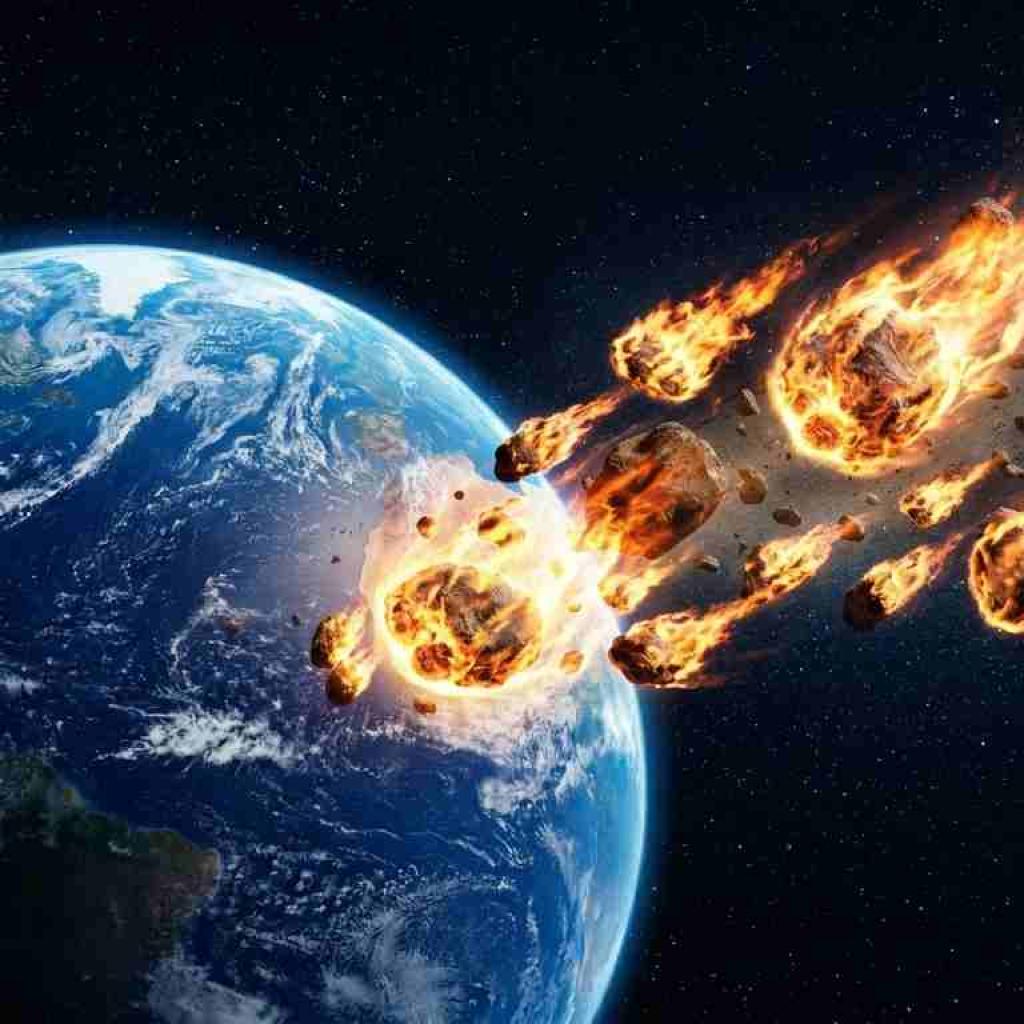
What if the next catastrophic cosmic impact wasn’t just a fictional storyline from a Hollywood movie but a real danger quietly orbiting above our heads? Scientists are now warning that thousands of potentially devastating asteroids capable of destroying entire cities remain undiscovered, raising concerns about how prepared humanity truly is for such a threat.
Up to 25,000 potentially dangerous asteroids
According to recent scientific findings, a significant number of near-Earth asteroids capable of causing massive destruction are still untracked. Data from the NSF–DOE Vera C. Rubin Observatory has already detected more than 11,000 new asteroids, marking an important milestone in modern astronomy. The observatory released its first scientific alerts in February, opening a new chapter in real-time monitoring of the night sky and allowing astronomers to better understand objects moving through our cosmic neighbourhood.
Planetary defence experts estimate that around 25,000 asteroids measuring at least 140 metres in diameter are large enough to cause catastrophic damage if they were to collide with Earth. However, more than 15,000 of these objects are still “untracked”, meaning scientists have identified only about 40% of the total population that could potentially cause regional devastation.
“This is exactly what keeps me up at night,” said Dr. Kelly Fast, acting planetary defense officer at NASA, recalling her warning during a scientific discussion in Arizona. She emphasised that while scientists are aware of extremely large asteroids capable of global destruction, smaller but still powerful objects remain difficult to locate. “Small stuff hits us all the time, and the massive ones from the movies we already know about. It’s the ones in between that could do regional - not global - damage, and we don’t know where they are.”
These intermediate-sized asteroids, often referred to as “city killers”, may not pose an extinction-level threat, but their impact could wipe out a major metropolitan area, causing significant loss of life and economic damage.
Hidden in glare and difficult to detect
One of the main challenges in detecting these asteroids lies in their faint visibility. Many of them are too dim to be easily spotted by conventional telescopes, and their location in space often places them in regions obscured by sunlight glare or masked by the vastness of space.
NASA currently relies on a combination of ground-based telescopes and previous missions such as the retired NEOWISE spacecraft, which spent years scanning the skies for potentially hazardous objects. Despite these efforts, scientists admit that without early detection, there is little that can be done to prevent a sudden asteroid strike.
“You can’t do anything about the asteroids if you don’t know where they are,” explained Dr. Nancy Chabot, a planetary scientist who led NASA’s Double Asteroid Redirection Test (DART) mission. The DART mission, conducted in 2022, successfully demonstrated that altering the trajectory of an asteroid is possible. However, the technology is not yet deployed as a permanent planetary defence system.
Why the hidden threat is considered dangerous
Experts believe the greatest concern does not come from small meteoroids that burn up harmlessly in Earth’s atmosphere, nor from giant asteroids that scientists have already identified and are monitoring. The real danger lies in medium-sized asteroids that are large enough to destroy cities but small enough to remain undetected until they approach dangerously close to Earth.
A reminder of this risk occurred in 2013 when a house-sized asteroid exploded in the sky above Chelyabinsk, Russia. The explosion released energy equivalent to hundreds of thousands of tonnes of TNT, injuring more than 1,600 people and damaging thousands of buildings. The event happened without any prior warning, highlighting the unpredictability of such incidents.
Scientists warn that if a slightly larger asteroid were to enter Earth’s atmosphere undetected, the consequences could be far more severe.
What’s being done to reduce the risk
To address this gap in planetary defence, NASA is developing the Near-Earth Object Surveyor (NEO Surveyor), a next-generation space telescope designed specifically to detect hazardous asteroids that current observation systems might miss.
The telescope, expected to launch later this decade, will use infrared technology to locate objects that are difficult to spot with traditional optical instruments. Scientists believe this advanced system will significantly improve the ability to identify dangerous asteroids early and provide sufficient warning time to prepare potential deflection missions.
Until the NEO Surveyor becomes operational, researchers caution that humanity remains vulnerable to unexpected asteroid strikes. While extinction-level impacts are extremely rare, the possibility of a city-level disaster remains a real concern for planetary defence experts worldwide.
As scientific observation technology continues to advance, researchers remain hopeful that improved detection capabilities will help reduce the risk of a surprise impact. For now, experts emphasise that the greatest threat may not come from the massive asteroids often portrayed in films, but from smaller, hidden objects silently orbiting our planet.
Source : Gulf News