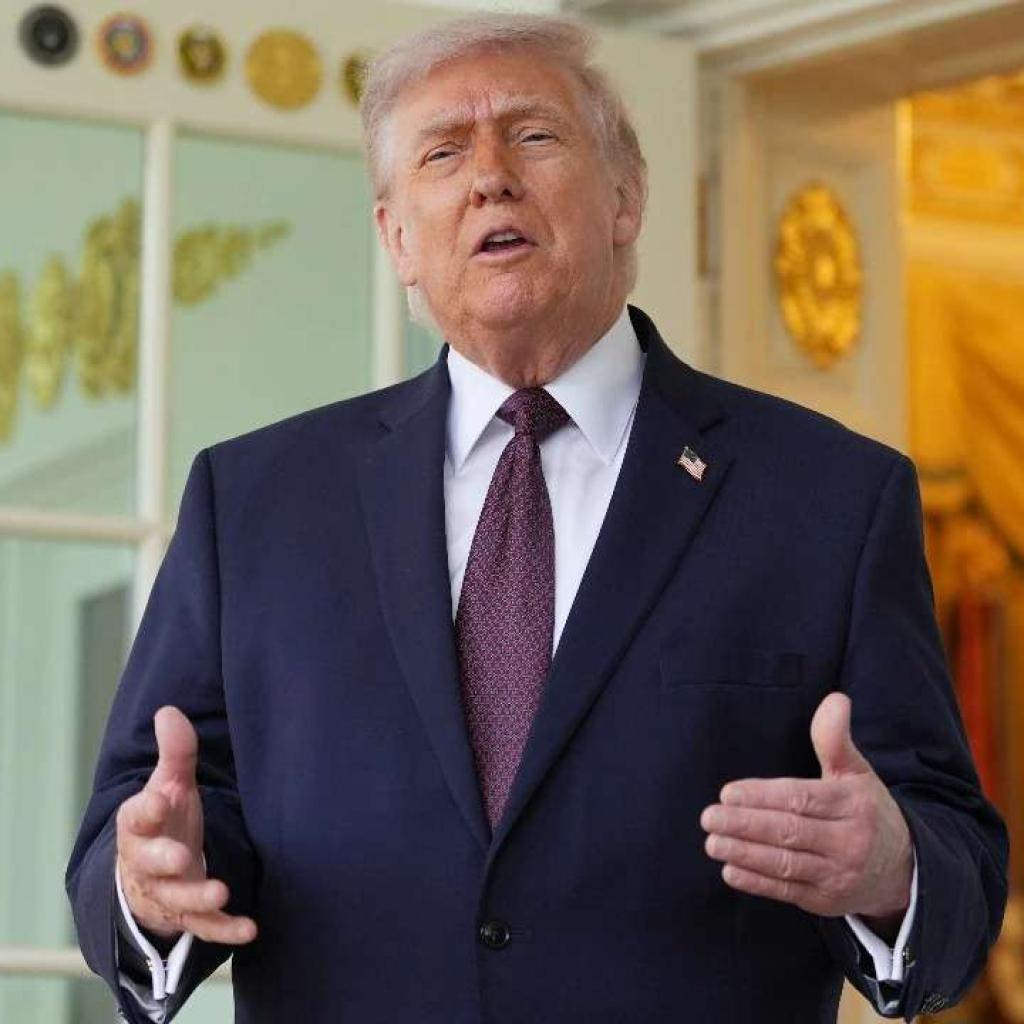
Washington, United States: US President Donald Trump on Thursday announced a major development in the ongoing Middle East crisis, stating that Iran has agreed to hand over its stockpile of enriched uranium. He added that both sides are now “close” to reaching a peace agreement that could potentially bring an end to the conflict that has gripped the region since late February.
The conflict, which erupted on February 28, has seen escalating tensions between Washington and Tehran, with the United States previously warning of severe consequences if Iran refused to engage in negotiations. These threats included the possibility of renewed airstrikes and a continued naval blockade targeting Iranian ports.
Trump expressed optimism about the diplomatic progress, telling reporters, "there's a very good chance we're going to make a deal." He further claimed, "They've agreed to give us back the nuclear dust," referring to Iran’s enriched uranium reserves, which Washington has long argued could be used in the development of nuclear weapons.
Ceasefire Efforts Expand Across the Region
In a parallel development, Trump also revealed that Israel and Lebanon have agreed to a temporary ceasefire. According to the announcement, the truce will last for 10 days starting Thursday. The US president noted that he expects the leaders of both nations to visit the White House within “four or five days” to further discussions.
The agreement marks a significant step toward de-escalation on another front of the broader regional conflict. Hezbollah lawmaker Ibrahim al-Moussawi indicated that the Iran-backed group would adhere to the ceasefire, provided Israeli forces halt their attacks. Both Israeli and Lebanese leadership have welcomed the truce, signaling cautious hope for stability.
Efforts to mediate and facilitate dialogue continue, with Pakistan playing a notable role. Pakistan’s army chief Asim Munir recently met with Iranian parliament speaker Mohammad Bagher Ghalibaf, who led Tehran’s delegation during the first round of talks. Although the initial discussions concluded without a breakthrough, both sides appear willing to continue negotiations.
Iran’s ambassador to the United Nations has expressed cautious optimism, stating that Tehran is hopeful for a “meaningful outcome” from ongoing diplomatic efforts aimed at ending hostilities with the United States.
White House Press Secretary Karoline Leavitt had earlier suggested that the next round of talks would likely take place in Pakistan’s capital. However, Pakistani foreign ministry spokesman Tahir Andrabi confirmed that no official date has yet been finalized.
US Vice President JD Vance, who led the initial negotiations, described the proposed agreement as a “grand bargain” designed to resolve long-standing disputes over Iran’s nuclear ambitions while also bringing an end to the war.
Nuclear Dispute Remains Central
At the heart of the negotiations is Iran’s nuclear programme. Trump has consistently emphasized that any agreement must ensure that Tehran is permanently prevented from developing nuclear weapons. However, claims that Iran was actively pursuing an atomic bomb have not been substantiated by international watchdogs.
The United States has reportedly proposed a 20-year halt to Iran’s uranium enrichment activities. In contrast, Iran has suggested a five-year suspension, an offer that US officials have rejected.
Tehran continues to maintain that its nuclear programme is intended solely for civilian purposes. The Iranian foreign ministry reiterated that while the level of uranium enrichment could be subject to negotiation, the country’s right to enrich uranium remains “indisputable.”
Rising Pressure and Military Warnings
Despite ongoing diplomatic efforts, tensions remain high. US Defense Secretary Pete Hegseth issued a stern warning, stating, "If Iran chooses poorly, then they will have a blockade and bombs dropping on infrastructure, power and energy."
The United States has already implemented a naval blockade, significantly impacting Iran’s maritime trade. According to US Central Command, economic activity through Iranian ports has been effectively halted, with at least 14 vessels reportedly turned back.
Further intensifying pressure, Washington imposed new sanctions targeting Iran’s oil sector. Treasury Secretary Scott Bessent said the measures were aimed at “regime elites.”
Iran has responded with strong warnings of its own. Senior military officials have threatened to block key waterways, including the Persian Gulf, the Sea of Oman, and the Red Sea, if sanctions and blockades continue. A military advisor to Iran’s leadership also cautioned that American ships could be targeted in the Strait of Hormuz if the US attempts to “police” the strategic route.
Lawmakers Voice Concerns in Washington
Back in the United States, the conflict has sparked debate among lawmakers. The US House of Representatives recently voted against a Democratic proposal to limit Trump’s authority to conduct military operations in Iran.
The vote reflects growing unease on Capitol Hill over the prolonged conflict, with concerns centered on rising financial costs, the lack of a clear resolution strategy, and the potential for the war to escalate further.
Israel’s Defense Minister Israel Katz described the current moment as a turning point for Iran. He stated: "Iran is standing at a historic crossroads: one path is renouncing the ways of terror and nuclear armament... in line with the US proposal, the other leads to an abyss. If the Iranian regime chooses the second path, it will quickly discover there are even more painful targets than those we have already struck."
As negotiations continue and tensions persist, the coming days are expected to be crucial in determining whether diplomacy can prevail over conflict in the Middle East.
Source : Gulf News
Image Source : India Today