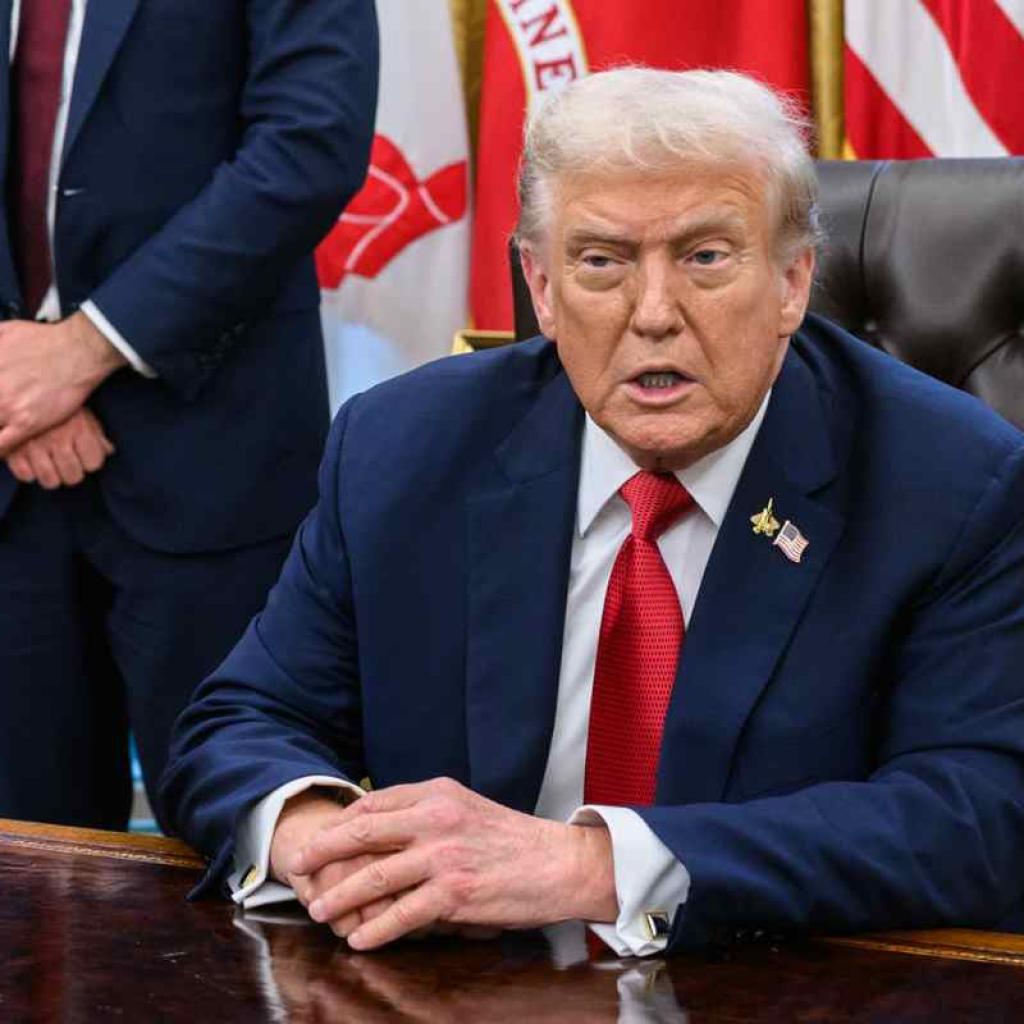
Former US President Donald Trump has suggested that the ongoing war involving the United States, Israel, and Iran could come to an end within the next two to three weeks, even without a formal agreement between Washington and Tehran. His remarks have drawn global attention as the conflict continues to disrupt energy markets, destabilize the Middle East, and create uncertainty in the global economy.
The statement comes amid ongoing military tensions that have already lasted for more than a month, significantly affecting oil supplies, regional security, and diplomatic relations between the United States and its European allies. Trump’s latest comments indicate a shift in tone from earlier claims that Iran was actively seeking negotiations and “begging” for a deal.
War May End Without Formal Agreement
Speaking to reporters at the White House, Trump said that a negotiated settlement is not necessary for the United States to stop its attacks on Iran. According to him, the primary objective of the military campaign is to weaken Iran’s nuclear capabilities to a point where it would not be able to develop nuclear weapons in the foreseeable future.
“Iran doesn’t have to make a deal, no,” Trump said while responding to questions about whether diplomatic negotiations were required for the war to conclude. He further added that US military involvement may wind down soon, stating that American forces could withdraw within a short timeframe.
“We’ll be leaving very soon … maybe two weeks, maybe three,” Trump said.
“When we feel that they are, for a long period of time, put into the Stone Ages and they won’t be able to come up with a nuclear weapon, then we’ll leave,” he said.
Iran, however, has consistently denied pursuing nuclear weapons, maintaining that its nuclear program is strictly for peaceful purposes such as energy production and scientific research.
Iranian Foreign Minister Abbas Araghchi confirmed on Tuesday that no formal negotiations are currently taking place between Tehran and Washington, despite ongoing indirect communication channels. His statement contradicts earlier claims by Trump that diplomatic talks were actively progressing.
Experts Question Timeline of the Conflict
Foreign policy analysts have expressed skepticism regarding Trump’s projected timeline for ending the war. Trita Parsi, an expert on Iran and a senior figure at the Quincy Institute, noted that similar predictions have been made previously but were not fulfilled.
According to Parsi, early in the conflict, officials suggested the war could conclude within just a few days. Later, estimates extended to several weeks, and now the timeline has once again been revised.
“Remember, at first they said that this war would be over in four days. Then, three weeks ago, they said it would take three weeks. Three weeks have passed, and now we hear that it’s two to three weeks,” Parsi said.
“The timeline just keeps on being extended because, at the end of the day, the United States is no longer in control of this war”, which has now turned into a “debacle”, he added.
Parsi also emphasized that achieving a sustainable resolution may require genuine diplomatic engagement rather than relying solely on military pressure.
“It would be much better for Trump to just end it as quickly as possible through real negotiations. Not these types of coercive measures that have been tried so far. Otherwise, three weeks from now, we’re likely going to hear that it’s going to take another three weeks.”
‘Go get your own oil!’
The ongoing conflict has had a major impact on global oil markets, with fuel prices rising sharply due to disruptions in the Strait of Hormuz, one of the world’s most important energy corridors. The strategic waterway is responsible for transporting nearly one-fifth of global oil and liquefied natural gas supplies.
Petrol prices in the United States have risen above an average of $4 per gallon (3.8 litres), reflecting the broader impact of the war on energy markets and consumer costs.
Amid these developments, Trump has criticized allied nations that have declined to participate militarily in efforts to secure shipping routes through the Strait of Hormuz. In a post on Truth Social, he expressed frustration toward countries that refused to support US operations against Iran.
“You’ll have to start learning how to fight for yourself, the U.S.A. won’t be there to help you anymore, just like you weren’t there for us. Iran has been, essentially, decimated. The hard part is done. Go get your own oil!” he said.
His remarks were widely interpreted as criticism of traditional allies such as the United Kingdom and France, which have taken cautious positions regarding direct involvement in the conflict.
US Defence Secretary Pete Hegseth also commented on the issue, suggesting that the United Kingdom’s military capabilities should allow it to contribute more actively to securing maritime routes in the region.
“Last time I checked, there was supposed to be a big, bad Royal Navy that could be prepared to do things like that as well,” Hegseth said.
UK Defence Secretary John Healey responded to the criticism during a visit to Qatar, reaffirming that the United Kingdom remains a committed ally of the United States while maintaining its current strategic stance.
France also reacted after Trump accused the country of being “VERY UNHELPFUL” for not allowing military flights carrying equipment to Israel to pass through French airspace. Officials from President Emmanuel Macron’s office clarified that France’s position on the conflict has remained consistent from the beginning.
“We are surprised by this tweet. France has not changed its position since day one [of the conflict] and we confirm this decision,” the office said.
Control of the Strait of Hormuz Remains Key Issue
According to analysts, control over the Strait of Hormuz remains one of the most significant strategic elements of the conflict. The narrow maritime route is vital for global energy trade, making any disruption highly impactful on the world economy.
Parsi argued that Trump is attempting to portray the conflict as a strategic success, even as the situation on the ground remains uncertain. He suggested that expectations for European involvement may not significantly alter the military balance in the region.
“The US has the largest and most powerful navy in the world. If the US cannot do it, what difference can the French make and other Europeans going in?” he said.
Parsi also pointed out that Trump’s reference to pushing Iran back to the “Stone Age” reflects a broader strategic approach aimed at weakening regional rivals for extended periods.
“This is how the Israelis are conducting the war. They are not looking for any strategic objective beyond the fact that they just want to make sure that their neighbours are as weak as possible, and every two to three years, they bomb them again.
“This is a ‘mowing the lawn‘ strategy,” he added.
Meanwhile, Israeli Prime Minister Benjamin Netanyahu indicated that the war has progressed significantly but declined to specify an exact timeline for its conclusion.
In a recent interview, Netanyahu said the campaign had advanced substantially in terms of achieving military objectives.
“But I don’t want to put a schedule on it,” he added.
As tensions continue to escalate, the international community remains closely focused on whether diplomatic engagement or continued military pressure will determine the outcome of the conflict. The war has already resulted in thousands of casualties and has created ripple effects across global energy markets, geopolitical alliances, and international security frameworks.
Source : Al Jazeera
Image source : Al 24 News