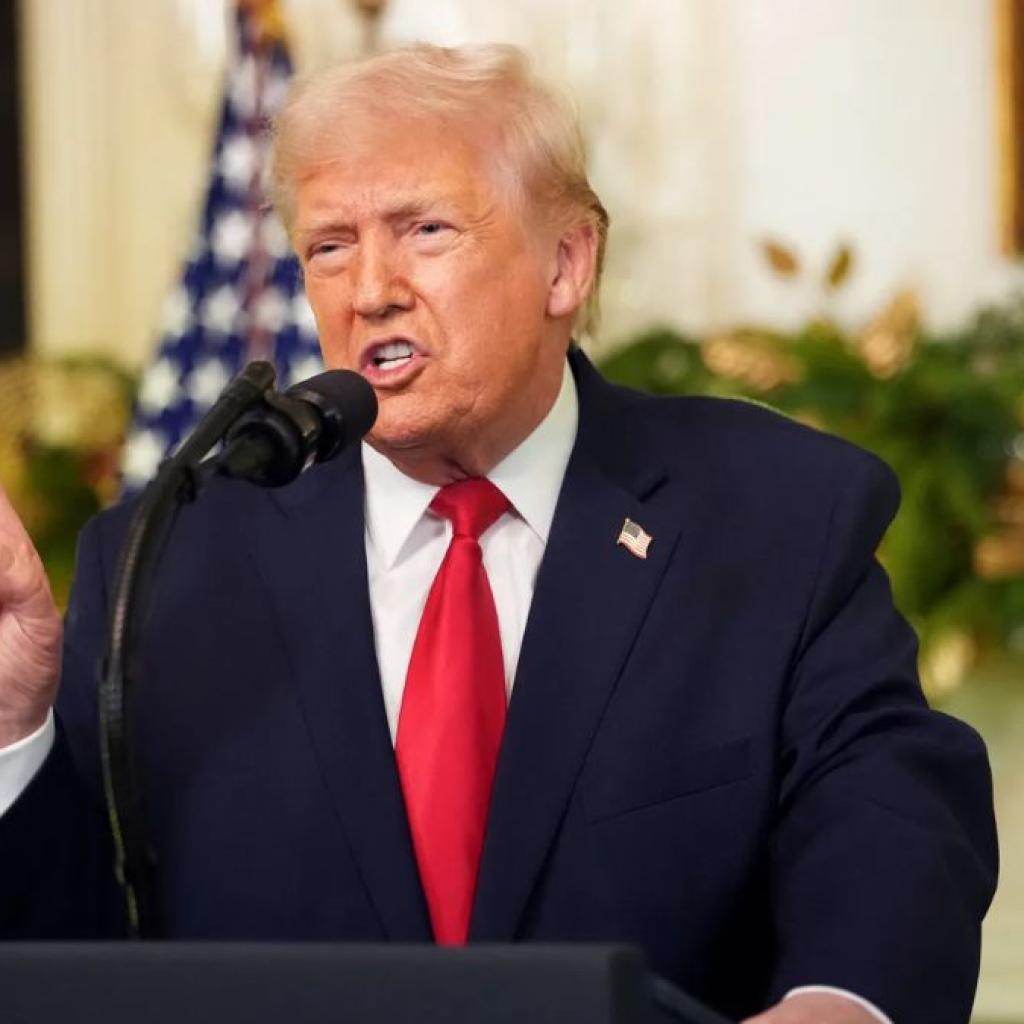
US President Donald Trump has declared that American forces will intensify military operations against Iran for the next two to three weeks, insisting that the United States is close to achieving its strategic objectives in the ongoing conflict. In a strongly worded national address, Trump said the war effort is nearing completion, while warning that Iran would continue to face heavy attacks in the short term.
The latest remarks come as tensions in West Asia remain high, with global oil markets experiencing volatility and international political pressure increasing over the direction of the war. Trump’s comments signal a continuation of military action even as concerns grow about rising energy prices, regional instability, and the potential expansion of the conflict.
US Signals Intensified Attacks on Iran
In his address, Trump emphasised that American forces are making rapid progress in achieving battlefield goals, claiming that the campaign has already delivered decisive results.
"Over the next two to three weeks, we are going to bring them back to the Stone Ages, where they belong," Trump said, reaffirming his administration’s hardline stance on Iran.
He also defended the strategy behind the military campaign, stressing that the United States would continue its operations until all objectives were achieved.
"I have made clear from the beginning of Operation Epic Fury that we will continue until our objectives are fully achieved."
"Thanks to the progress we have made, I can say tonight that we are on-track to complete all of America's military objectives shortly."
The president repeated similar sentiments in another statement, emphasising that US forces are nearing the completion of their mission.
“We are going to hit them extremely hard over the next two to three weeks,” Trump said. “We’re going to bring them back to the Stone Ages, where they belong.”
“Tonight, I’m pleased to say that these core strategic objectives are nearing completion,” he added.
Despite his confident tone, Trump provided limited details on what final steps the US military may take before the conflict ends. He also did not confirm whether ground troops would be deployed inside Iran.
Global Markets React as Oil Prices Surge
Financial markets reacted quickly to Trump’s remarks, with oil prices rising sharply amid concerns over supply disruptions linked to tensions in the Strait of Hormuz. The narrow maritime route plays a crucial role in global energy trade, carrying a significant portion of the world’s oil shipments.
Since the conflict began, energy prices have surged considerably, with Brent crude increasing by more than 40 percent. Analysts say the continuing instability has raised concerns about inflation and economic pressure in several countries.
Trump acknowledged the impact of the war on global markets but argued that US military actions have significantly weakened Iran’s strategic capabilities.
He stated that key nuclear facilities had been severely damaged, claiming that heavy bombardment had set back Iran’s nuclear programme considerably.
“The nuclear sites that we obliterated with the B-2 bombers have been hit so hard that it would take months to get near the nuclear dust,” Trump said.
“And we have it under intense satellite surveillance and control. If we see them make a move, even a move for it, we’ll hit them with missiles very hard again.”
Trump encourages other countries to take the Strait
The US president also called on other nations to play a greater role in securing the Strait of Hormuz, a vital waterway for global oil transport. Trump suggested that countries heavily dependent on energy imports through the route should take responsibility for protecting it.
He urged allied nations to show greater determination in ensuring the free flow of oil shipments.
The president also indicated frustration with NATO allies and other international partners who have not joined US-led military efforts in the region. He pointed out that many countries rely heavily on oil transported through the strait but have not contributed to securing it.
In remarks made earlier in the day, Trump suggested that other global powers should consider playing a more active role.
“Let South Korea do it,” he said, referring to efforts to reopen the strait.
“Let Japan do it. They get 90% of their oil from the strait. Let China do it.”
‘We could just take their oil’
Earlier comments made during a White House Easter lunch also attracted attention after Trump suggested that the US could take control of Iran’s oil resources.
“We could just take their oil,” Trump said.
“But you know, I’m not sure that the people in our country have the patience to do that, which is unfortunate.”
“Yeah, they want to see it end. If we stayed there, I prefer just to take the oil,” Trump said.
“We could do it so easily. I would prefer that. But people in the country sort of say: ‘Just win. You’re winning so big. Just win. Come home.’ And I’m OK with that, too, because we have a lot of oil between Venezuela and our oil.”
Meanwhile, Iran rejected claims that it was seeking a ceasefire, with officials calling suggestions about a change in leadership “false and baseless.” Iranian President Masoud Pezeshkian also addressed American citizens in a public message, questioning the purpose of the war.
“Exactly which of the American people’s interests are truly being served by this war?” he wrote.
Trump’s objectives have shifted since the war started
Since the war began on February 28, the US administration has presented varying timelines regarding the duration and scope of the conflict. While Trump has repeatedly suggested the war could end soon, additional US troops have continued to move into West Asia, increasing speculation that the conflict could expand.
Israel has also been involved in attacks on Iran, further complicating the geopolitical situation and raising concerns about a wider regional escalation.
The rising cost of oil, fuel, and basic goods has added pressure on governments worldwide, as consumers face higher living expenses linked to energy market instability.
Despite uncertainty surrounding the conflict’s final outcome, Trump maintained that the United States is close to concluding its military campaign.
“We are going to finish the job, and we’re going to finish it very fast. We’re getting very close.”
Observers say the coming weeks will be critical in determining whether diplomatic efforts emerge or whether the conflict continues to escalate, affecting global markets, political alliances, and regional stability.
Source : Gulf News
Image source : Financial Express