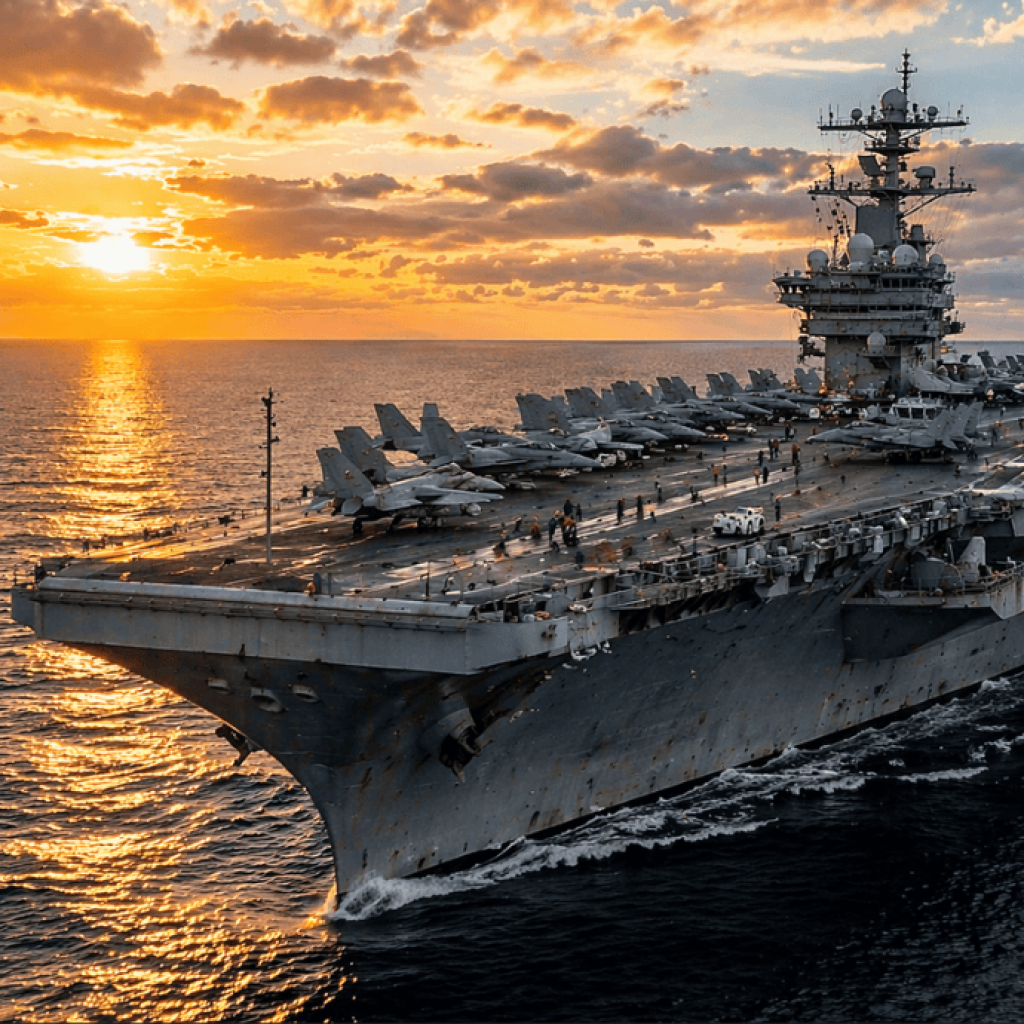
A United States aircraft carrier has made history by completing the longest deployment recorded since the Vietnam War, highlighting the growing operational demands on the US Navy amid ongoing global security challenges.
The extended mission reflects a shift in military strategy, with naval forces being required to maintain a sustained presence across key regions for longer periods. Officials say the deployment underscores both the capabilities and the pressures faced by modern naval operations.
A Historic Deployment
The carrier remained at sea for an unusually long duration, surpassing previous records set in the decades following the Vietnam War. While exact timelines were not fully detailed, the deployment significantly exceeded standard mission lengths, which typically range between six to seven months.
This milestone is being seen as a testament to the endurance of both the vessel and its crew, who operated under demanding conditions throughout the mission.
Rising Global Commitments
The extended deployment comes at a time when the United States is balancing multiple security commitments across different regions. From maintaining stability in strategic waterways to supporting allied operations, the Navy has been tasked with a broader and more complex set of responsibilities.
Military analysts suggest that such prolonged deployments are becoming more common as geopolitical tensions continue to evolve, requiring a consistent naval presence in critical areas.
Impact on Crew and Operations
While the achievement highlights operational strength, it has also drawn attention to the challenges faced by service members. Long deployments can place significant physical and mental strain on sailors, who must adapt to extended periods away from home.
Navy officials acknowledged the sacrifices made by the crew, noting that maintaining morale and readiness during such missions requires careful planning and support systems.
At the same time, prolonged deployments can impact maintenance schedules and equipment readiness, making logistical planning even more crucial.
Strategic Importance
Aircraft carriers remain a central component of US military strategy, serving as mobile bases capable of projecting power across vast distances. Their ability to operate in international waters makes them essential for rapid response and crisis management.
The record-breaking deployment demonstrates how these assets continue to play a vital role in global security, even as operational demands increase.
Adapting to Modern Challenges
The US Navy has been adapting its strategies to meet the changing nature of global threats. This includes increasing flexibility in deployment schedules and enhancing coordination with allied forces.
However, the extended mission also raises questions about sustainability. Defence experts have pointed out the need to balance operational requirements with the well-being of personnel and the long-term maintenance of naval assets.
Looking Ahead
As global security dynamics continue to shift, extended deployments may become a more frequent part of naval operations. The recent record serves as both an achievement and a reminder of the challenges that come with maintaining a constant military presence worldwide.
Officials are expected to review the deployment’s outcomes to assess its impact and inform future strategies.
A Milestone with Broader Implications
The record-setting mission marks a significant moment for the US Navy, reflecting its ability to operate under demanding conditions while meeting evolving strategic needs.
At the same time, it highlights the importance of ensuring that operational success is balanced with sustainability, readiness, and the welfare of those serving on the front lines.
Source: Gulf News