The conflict involving the United States, Israel, and Iran entered its sixth day, positioning the Middle East at the centre of global attention once again. As military operations continue and diplomatic tensions rise, most commercial flights in and out of the United Arab Emirates remain suspended, affecting passengers and airlines across the region. Meanwhile, both military action and diplomatic signals are shaping how countries respond to the ongoing crisis.
Escalating Conflict and Military Action
The situation stems from a sharp escalation in military operations after joint strikes by the United States and Israel targeted key sites inside Iran. In response, Iran launched missile and drone attacks on US, Israeli, and allied positions across the Middle East, leading to widespread concern over civilian safety and regional stability.
As the conflict continued through Day 6, reports indicate that the United States has expanded its military campaign deeper into Iranian territory, targeting additional strategic positions in an effort to limit Iran’s offensive capabilities. The Pentagon described this shift as an escalation designed to degrade the country’s ability to project force.
At the same time, Iran has quietly communicated through intermediaries that it may be open to talks to ease the conflict, although senior US officials have made clear that, so far, no formal negotiations have begun. The back-and-forth between signals of openness to dialogue and continued military operations highlights the complex nature of the crisis.
UAE, the Gulf, and Airspace Closures
One of the most noticeable impacts of the conflict has been on air travel. Countries across the Gulf region, including the UAE, have restricted civilian flights and partly closed their airspace as a safety precaution amid missile and drone activity. Civil aviation authorities and airport operators have repeatedly warned passengers not to travel to airports unless their flights are officially confirmed, as most scheduled services remain suspended.
In the UAE, major carriers like Emirates, Etihad Airways, flydubai, and Air Arabia are operating a limited number of flights, mostly focused on repatriations, special emergency services, and essential travel. Most regular commercial flights have been paused, leading to significant disruption for holidaymakers, business travellers, and expatriates.
Dubai Airports has emphasised that terminals will only allow entry to passengers whose flights have been confirmed a measure aimed at reducing crowding and ensuring that operating flights remain manageable under challenging conditions.
Impact on Passengers and Travel Plans
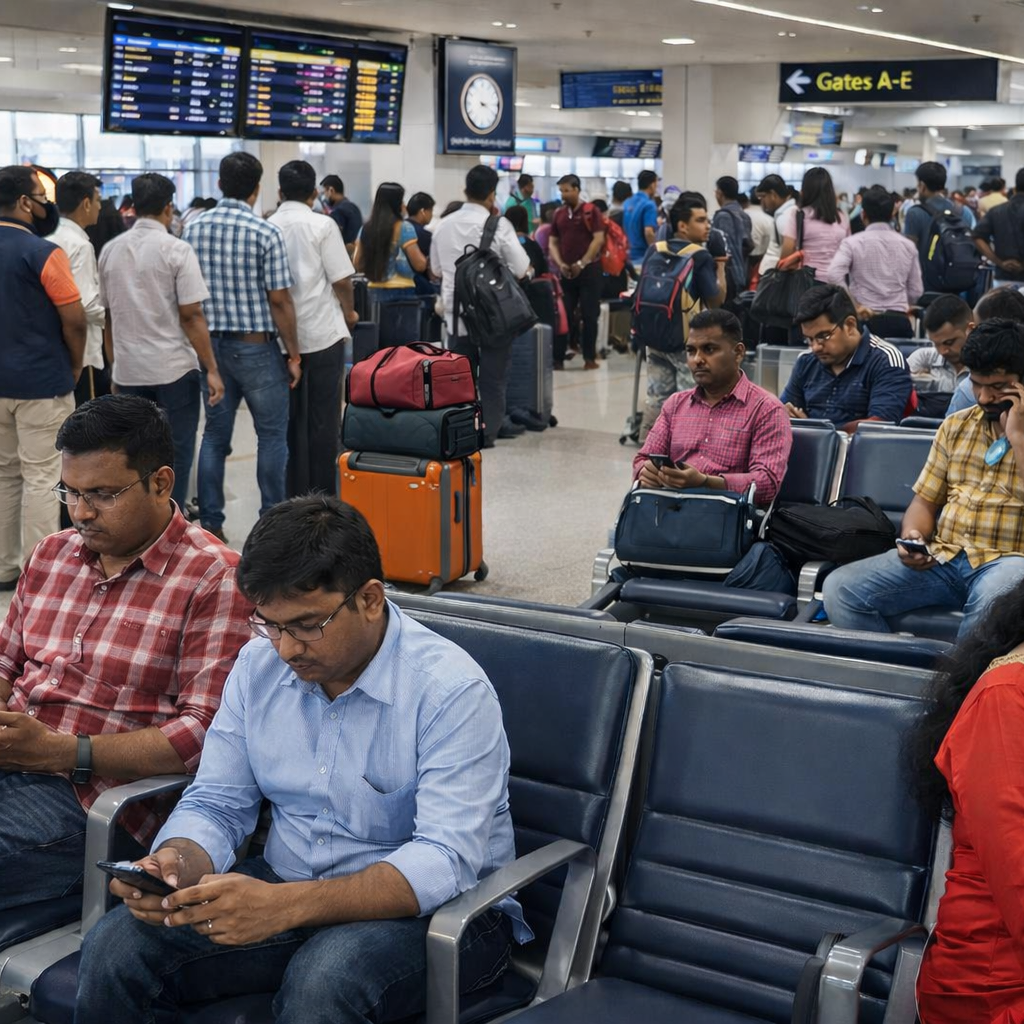
The suspension of most flights has left thousands of passengers stranded in the UAE and abroad. Airports across the Gulf, which serve as major international transit hubs, have been particularly affected. Airlines around the world have also cancelled or rerouted flights that usually connect through Middle Eastern airports, compounding global travel delays.
Many airlines are now offering refunds, rebooking options, or special repatriation flights to help passengers affected by the disruptions. However, the lack of a clear timeline for full resumption of services means travellers are still facing uncertainty and frequent changes to their itineraries.
Travel agents and aviation experts advise passengers to stay in close contact with their airlines and avoid going to airports without confirmed flight details, as schedules may shift or be cancelled with little notice.
UAE Air Defence and Domestic Safety Measures
While the UAE has been impacted by the broader conflict, authorities have stressed that the country is not a direct participant in the conflict and has not allowed its territory or airspace to be used in attacks against Iran.
Federal authorities have also highlighted the role of the UAE’s air defence systems, which have intercepted a large number of missiles and drones since the crisis began. These interceptions are part of efforts to protect civilians and key infrastructure, and loud explosions heard by residents in recent days have been attributed to defence operations rather than direct attacks within the country.
At the same time, the UAE government has issued public guidance encouraging citizens and residents to rely on official sources for updates, to follow safety instructions when alerts sound, and to avoid spreading unverified information on social media.
Diplomatic Signals and Possible Talks
Despite continued fighting, there are some signals that diplomatic channels remain open behind the scenes. Iranian officials have suggested they might be willing to engage in discussions to reduce hostilities, though US authorities say no formal negotiations have begun. This mixture of military escalation and tentative diplomatic overtures suggests that while tensions remain high, there is still space for dialogue if parties choose to pursue it.
Economic and Regional Consequences
Beyond travel disruptions, the ongoing conflict has wider economic implications. The Middle East hosts some of the world’s busiest aviation hubs, and prolonged airspace closures could have cascading effects on global travel networks, supply chains, and trade. Airlines typically use Gulf routes to connect Europe, Asia, Africa and the Americas, meaning interruptions in this region can ripple around the world.
Regional governments are also taking steps to reassure citizens about food security, markets, and essential services amid the uncertain environment. In the UAE, authorities have affirmed that food supply chains remain stable and sufficient, and have invited consumers to report any price irregularities to official channels.
Outlook
As the conflict enters a new phase on Day 6, residents, travellers, and governments are watching to see whether military operations continue or whether diplomatic efforts can gain momentum. For now, safety remains the top priority, and passengers are urged to stay informed and prepared for changes in travel plans, while authorities continue to monitor the situation and provide regular updates through official channels.
Source: Gulf News