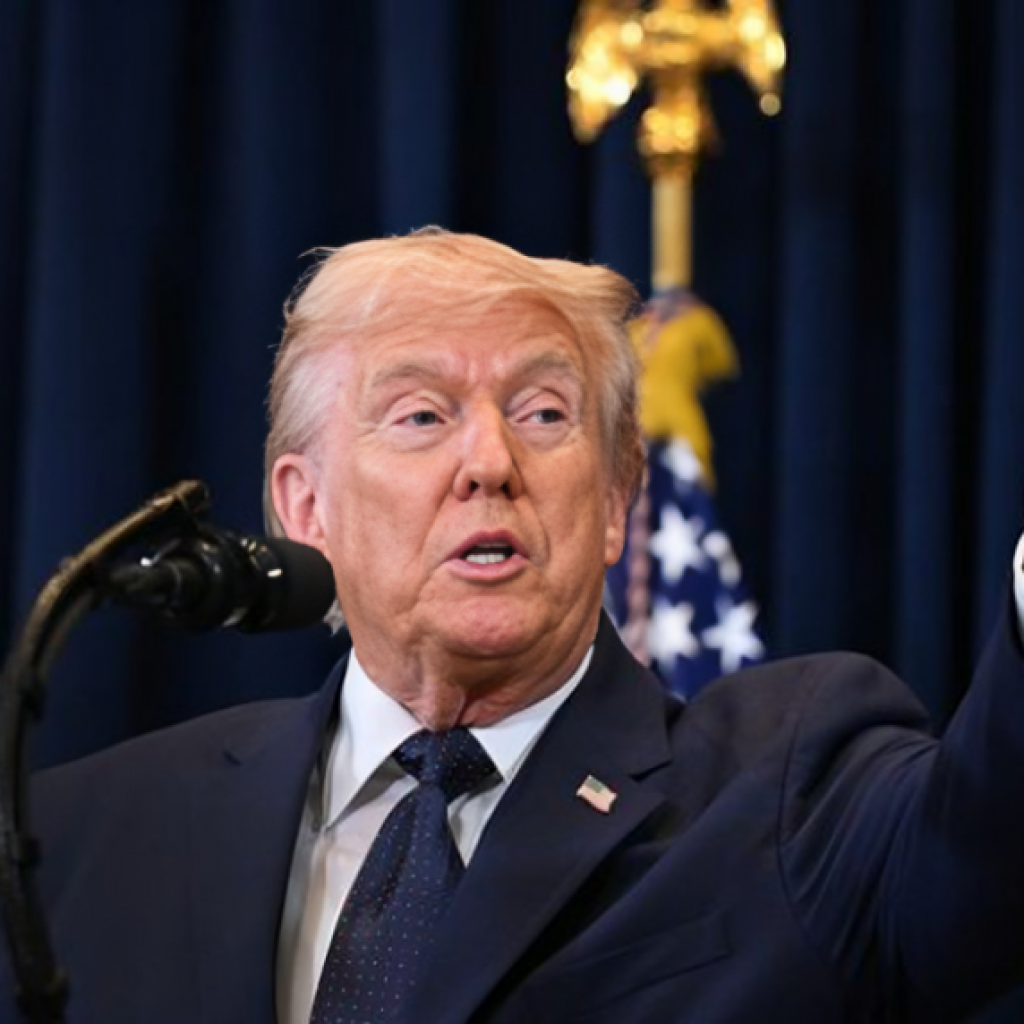
U.S. President Donald Trump has expressed strong frustration after NATO and several key allies declined his request to support efforts in securing the strategically vital Strait of Hormuz, as tensions continue to escalate amid the ongoing conflict with Iran.
Speaking during a meeting with Irish Prime Minister Micheál Martin at the White House on St. Patrick’s Day, Trump openly criticized traditional allies for what he described as a lack of support. The U.S. leader has been urging allied nations to deploy naval resources, particularly minesweepers, to ensure safe passage through the Strait of Hormuz - a crucial global oil transit route that carries nearly 20% of the world’s crude supply.
Despite these efforts, Trump acknowledged that his appeals have largely been rejected. “You would have thought they would have said, We'd love to send a couple of minesweepers.' That's not a big deal,” he said. “It doesn't cost very much money. But they didn't do that.” He further expressed disappointment, stating that the U.S. is not receiving backing “despite the fact that we helped” NATO “so much.”
The remarks highlight growing divisions between Washington and its allies, as the conflict - now entering its third week - continues to ripple across global markets and geopolitical alliances. While Trump has maintained that the military action against Iran is necessary to prevent it from acquiring nuclear weapons, many international partners appear reluctant to be drawn into what they view as a unilateral decision.
However, Trump also struck a defiant tone, insisting that the United States is capable of handling the situation independently. “We don't need any help, actually,” he said, signaling a shift from earlier calls for international cooperation to a more self-reliant stance.
The strained relationship with NATO has once again come into focus. Trump, who has long criticized the alliance for relying too heavily on U.S. support, reiterated his concerns that member nations have not reciprocated America’s long-standing military and financial contributions. He pointed out that the U.S. has spent billions supporting European and Asian defense systems, including significant aid to Ukraine in its war against Russia.
At the same time, Trump questioned the alliance’s relevance in the current crisis, calling the moment a “great test” for NATO and warning that it was making “a very foolish mistake” by refusing to assist. He even hinted at reconsidering the U.S. role within the alliance, stating, “It's certainly something that we should think about. I don't need Congress for that decision,” although he added that no immediate plans were in place.
NATO, however, has remained firm in its position. As a defensive alliance, it has clarified that it has no intention of joining an offensive military campaign against Iran. While the alliance has participated in past operations, including missions in Afghanistan and Libya, officials have stressed that the current conflict does not fall within its mandate.
Beyond NATO, several other nations - including Japan, Australia, South Korea, and even China - have also declined to participate in securing the Strait of Hormuz. The refusal reflects widespread concern about escalating the conflict further, especially given the waterway’s importance to global energy markets. Asian economies, in particular, remain highly dependent on oil shipments passing through the strait.
European leaders have also pushed back strongly against Trump’s calls. Kaja Kallas, the European Union’s top diplomat, made it clear that the bloc does not want to be dragged into the conflict. “This is not Europe's war. We didn't start the war. We were not consulted,” she said, emphasizing the EU’s collective stance against involvement.
French President Emmanuel Macron echoed a similar position, stating that France is willing to help secure the Strait of Hormuz - but only under a neutral mission separate from the ongoing war. “We are not a party to the conflict, and therefore France will never take part in operations to reopen or liberate the Strait of Hormuz,” Macron said. Trump, however, dismissed the French leader’s stance, responding bluntly to the remarks.
Tensions have also surfaced with the United Kingdom. British Prime Minister Keir Starmer initially blocked the use of British bases for U.S. strikes on Iran, though he later permitted limited access for targeting ballistic missile sites. Trump expressed disappointment over what he perceived as hesitation from one of America’s closest allies.
Meanwhile, the U.S. military has continued its operations in the region. Officials confirmed that American forces carried out strikes using powerful bunker-busting bombs on Iranian missile facilities near the Strait of Hormuz. According to U.S. Central Command, these sites posed a significant threat to international shipping.
Despite the lack of direct military support, Washington is still working through diplomatic channels to build broader pressure on Iran. The U.S. State Department has reportedly urged multiple countries to designate the Islamic Revolutionary Guard Corps (IRGC) and Hezbollah as terrorist organizations - a move that would trigger sanctions and further isolate Iran internationally.
The situation underscores a growing divide between the United States and its traditional allies at a time of heightened global uncertainty. While Trump continues to push forward with his strategy, the reluctance of other nations to join the effort signals a cautious international approach to a conflict that could have far-reaching consequences.
As tensions persist and the stakes remain high, the unfolding situation in and around the Strait of Hormuz continues to test not only military capabilities but also long-standing diplomatic relationships.
Source : Telegraph India
Image Source : Newsonair