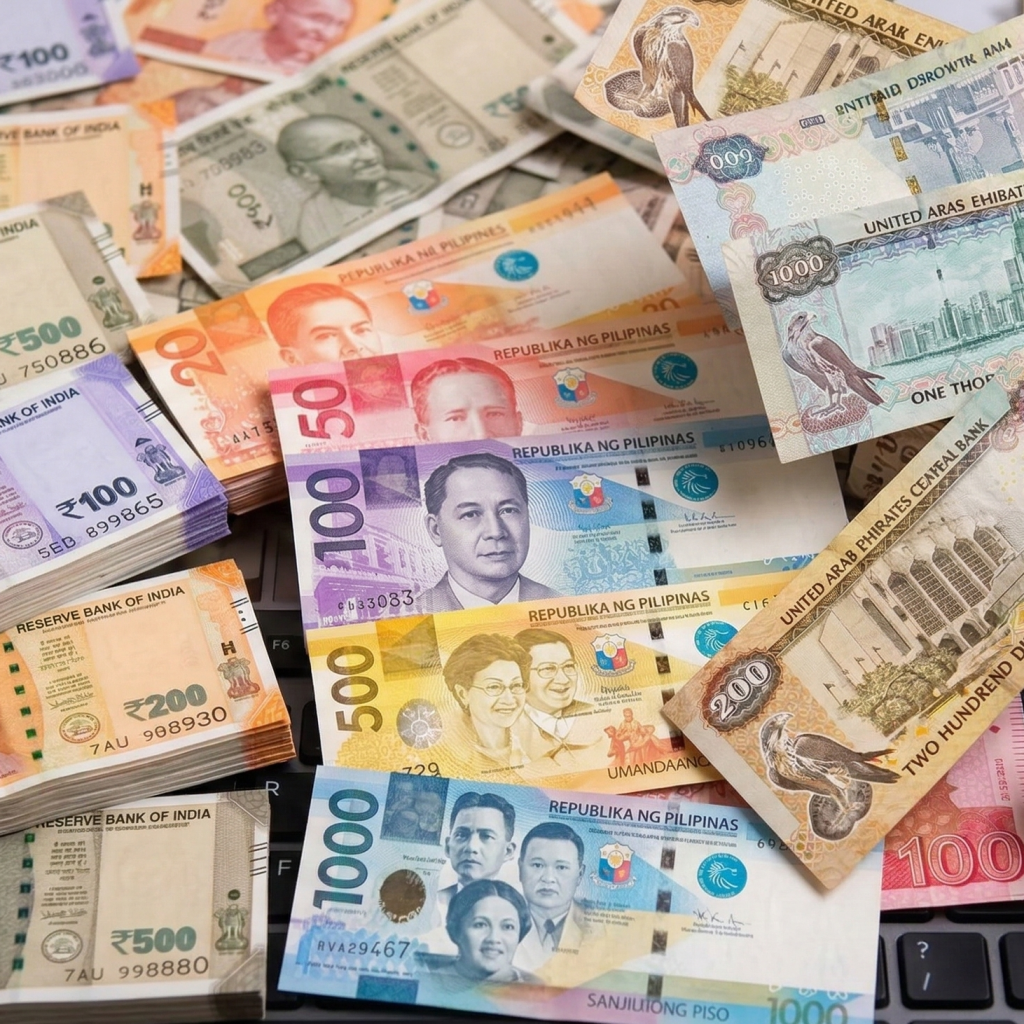
A recent decline in several Asian currencies is creating a financial advantage for expatriates working in the United Arab Emirates. The weakening of currencies such as the Indian rupee and the Philippine peso against the UAE dirham is allowing expatriates to send more money home with the same amount of earnings.
For millions of workers in the UAE who regularly send money to their families in Asia, this currency shift has opened what many financial experts describe as a “remittance opportunity.” With exchange rates moving in favor of the dirham, expatriates can now get a higher value when converting their income into their home currencies.
Why the Dirham Is Now Stronger
The UAE dirham is pegged to the US dollar, which means its value tends to remain stable. However, several Asian currencies have weakened due to economic pressures, global market movements, and changes in investor sentiment.
As a result, one dirham currently converts into more rupees or pesos than it did earlier. For example, the Indian rupee has dropped to near record lows against the dirham in recent months, at times moving close to 24–25 rupees per dirham.
When the receiving currency becomes weaker, it means expatriates can send the same amount of money, but their families receive more in local currency. This increase in purchasing power is one of the main reasons many workers are rushing to transfer funds now.
Surge in Remittance Activity
Money exchange houses and remittance companies in the UAE have reported a noticeable increase in transactions. Many expatriates are choosing to transfer larger amounts than usual or are sending money earlier than planned to benefit from the favorable exchange rate.
Financial experts say this trend is common whenever there is a major shift in currency values. When exchange rates become favorable, people prefer to lock in the rate quickly to avoid missing the opportunity.
This situation is especially important in the UAE because a large portion of the population consists of expatriate workers from countries like India, Pakistan, and the Philippines. These communities send billions of dollars every year to support families, pay loans, fund education, or invest in property back home.
A Boost for Families Back Home
The benefit of this currency shift is not only felt by the workers abroad but also by their families. When remittances arrive in local currency, households can receive significantly more money than usual without the sender increasing the amount.
For example, if a worker sends 1,000 dirhams when the exchange rate is higher, the family may receive thousands of extra rupees compared to when the currency was stronger. This additional amount can help cover daily expenses, school fees, medical bills, or savings.
In countries like India and the Philippines, remittances play a crucial role in the economy. Millions of families depend on funds sent by relatives working overseas. When exchange rates move in favor of expatriates, the economic impact can spread across many households.
Experts Advise Watching Currency Trends
While the current situation is beneficial for senders, financial analysts warn that currency markets can change quickly. Exchange rates depend on several factors including inflation, interest rates, global trade conditions, and investor activity.
Because of this, experts recommend that expatriates monitor exchange rates regularly and avoid waiting too long if the current rate already offers a good return. Some people choose to send money in smaller amounts over time instead of one large transfer, which helps reduce the risk of sudden market changes.
Digital money transfer platforms and exchange houses also provide tools that allow users to track currency movements and lock in rates when they reach a favorable level.
A Temporary Window of Opportunity
Although the weak rupee and peso are currently helping expatriates send more money home, economists say this advantage may not last forever. Currency markets often move in cycles, and a recovery in these currencies could reduce the remittance benefit.
For now, however, many UAE residents see the situation as a valuable opportunity. By taking advantage of the favorable exchange rates, expatriates can support their families more effectively while maximizing the value of their hard-earned income.
As long as the dirham remains strong against these currencies, remittances from the UAE are expected to remain high, giving millions of families across Asia a welcome financial boost.
Source: Gulf News