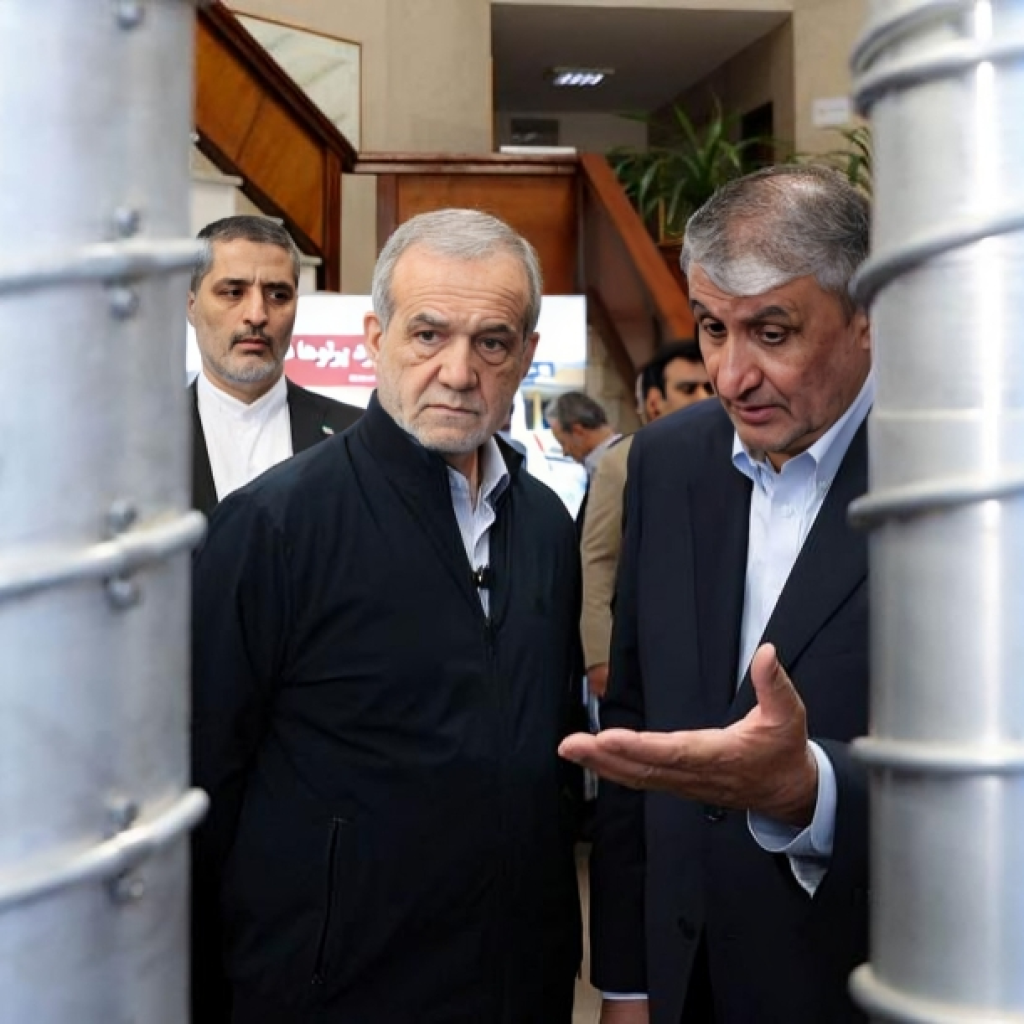
As tensions rise between Iran and the United States, Tehran’s leadership appears to be operating under a stark strategic assumption: yielding to Washington’s demands could endanger the regime more than the risks posed by military confrontation.
According to a recent analysis published by The New York Times, Iranian resistance is not rooted in miscalculation or diplomatic stubbornness alone. Instead, it reflects a deeply embedded belief within the country’s political and security establishment that certain elements of its defence posture are untouchable and central to regime survival.
A Fundamental Gap in Threat Perception
At the core of the impasse lies a widening divide in how both sides perceive risk.
Washington has framed its key demands - including a “zero enrichment” policy for uranium and strict limitations on ballistic missile development - as necessary safeguards to prevent nuclear proliferation and ensure regional stability. From the American perspective, these measures are designed to reduce the likelihood of weaponisation and escalation.
Tehran, however, sees the same demands through an entirely different lens. For Iran’s leadership, uranium enrichment and missile capability are not merely technical programmes open for negotiation; they are pillars of national defence and regime security.
Ali Vaez, Iran director at the International Crisis Group, has previously argued that Iranian officials view these capabilities as non-negotiable foundations of deterrence. In this framework, compromise is equated with vulnerability.
The Strategic Weight of Uranium Enrichment
Iran has long maintained that uranium enrichment is its sovereign right under international law. But analysts suggest that the issue extends beyond legal interpretation.
Even without pursuing weaponisation, maintaining what experts describe as “threshold nuclear capability” shifts regional power dynamics. A state that possesses advanced enrichment capacity - even if it stops short of building a weapon - can generate strategic ambiguity. That ambiguity alone may deter adversaries by complicating their calculations.
European diplomats involved in monitoring negotiations have noted that mastery of the enrichment cycle provides Tehran with latent leverage. From Iran’s perspective, dismantling such infrastructure would remove a powerful deterrent layer without any certainty that sanctions relief or political normalization would follow.
Missile Development as a Substitute for Air Power
Iran’s ballistic missile programme carries similar strategic significance. Decades of sanctions and restricted access to advanced aircraft have left Iran with an ageing air force. As highlighted in analysis by BBC, missile development has effectively become a substitute for conventional air superiority.
Defence analysts such as Farzin Nadimi have pointed out that ballistic missiles are considered Iran’s most credible deterrent asset. They compensate for structural weaknesses in traditional military capabilities and provide Tehran with the ability to project force across the region.
For Iranian decision-makers, relinquishing or severely limiting this programme would risk eroding one of the few areas where they maintain a strategic advantage.
Regime Survival Over Economic Relief
Economic strain inside Iran has been significant, with sanctions continuing to weigh heavily on the country’s economy. Yet analysts cited by The New York Times argue that Tehran’s leadership fears concessions might not produce the desired relief.
There is skepticism within Iranian political circles that accepting U.S. demands would end confrontation. Instead, many believe it could invite additional pressure or new conditions. In this view, capitulation might weaken elite cohesion and undermine the ideological legitimacy of a regime built on resistance to external influence.
Political risk consultants in the Gulf region suggest that a government whose identity is closely tied to defiance would struggle to justify what could be perceived domestically as strategic surrender.
Diplomacy Amid Military Posturing
Diplomatic efforts are ongoing, with U.S. and Iranian negotiators expected to meet in Geneva in an attempt to find common ground. Reports indicate that proposals allowing narrowly restricted nuclear activity for medical or civilian purposes have been floated as potential compromise frameworks.
However, the prospects for a breakthrough remain uncertain. U.S. officials continue to insist that enrichment limits are central to any viable agreement, while Tehran appears unwilling to dilute what it sees as core deterrent capabilities.
Meanwhile, military realities cast a long shadow over the talks. American carrier groups, combat aircraft and missile defence systems remain deployed across the region, signaling readiness to escalate if diplomacy collapses.
Yet analysts caution that coercive pressure does not always produce predictable results. For Iran’s leadership, the calculation seems to be that endurance - even under sanctions and threat of conflict - may be less dangerous than conceding strategic ground.
A Calculated Risk
Ultimately, Tehran’s approach reflects a prioritisation of regime survival above all else. In the eyes of its leaders, preserving deterrence mechanisms outweighs short-term economic relief or diplomatic easing.
Whether this calculus proves sustainable remains to be seen. But for now, Iran appears convinced that safeguarding its enrichment programme and missile capabilities is essential - even if it means navigating an increasingly volatile standoff with Washington.
Source : Gulf News
Image Source: The Arab Weekly