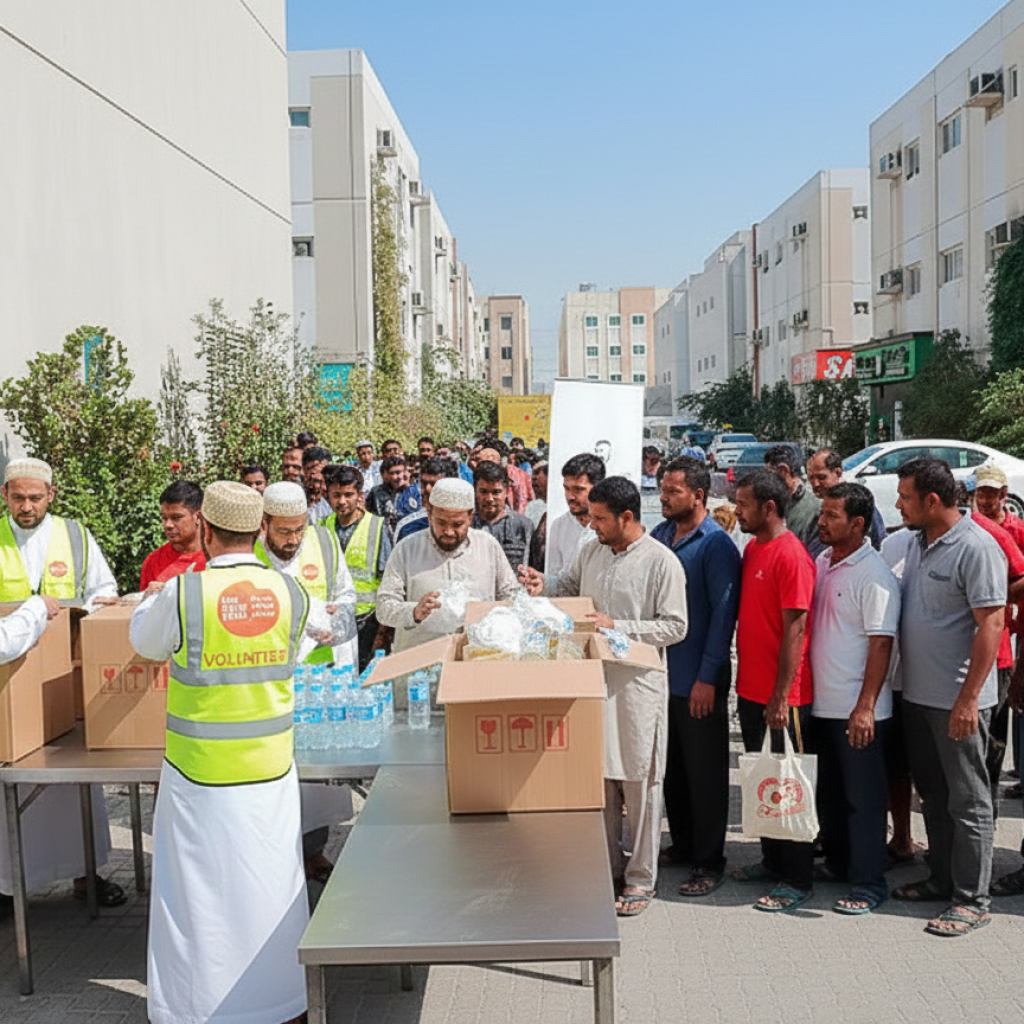
During Ramadan, a period often associated with abundant meals and large community gatherings, one group is taking a structured and data-driven approach to reduce food waste. The Dawoodi Bohra community’s Zero Food Waste initiative, managed by the Dana Committee, is built around a simple but powerful principle: every dana(grain) should be valued and not wasted.
Mukarram Khumusi, a Dana Committee volunteer in Dubai, explains that in a region known for generous hospitality, discipline in consumption carries special meaning. He says the concept of danareflects ethical responsibility and draws inspiration from teachings in the Quran that encourage moderation and discourage waste. This value shapes how the community plans and manages iftar gatherings throughout Ramadan.
The initiative begins with careful preparation. Menus are designed to ensure balance and avoid unnecessary duplication of dishes. Portion sizes are calculated based on attendance trends rather than rough estimates. Seating is also organised in smaller groups, which helps prevent over-serving and encourages shared responsibility. Volunteers gently guide attendees with a consistent message: take only what you need and finish what you take.
According to Khumusi, this approach has gradually developed into a broader culture of mindful consumption within the community. Over time, the practice has extended beyond Ramadan and is now applied to other community meals and gatherings as well.
A key factor strengthening the initiative is its shift toward data-based planning. In the past, large iftar events often relied on generous approximations that resulted in surplus food. Today, attendance confirmations are collected through RSVP systems before each gathering. Historical turnout patterns are analysed by location and day of the week, allowing organisers to predict participation more accurately. Caterers are then provided with precise headcounts instead of broad projections.
Menus are also shared in advance so that attendees with dietary preferences can opt out of specific dishes. During the meal, volunteers observe serving patterns and review plate returns to understand consumption trends. If certain dishes are frequently left unfinished, quantities are adjusted for the following day. Khumusi notes that even a small ten percent correction in portion planning can lead to a substantial reduction in food waste over the course of the month.
Globally, the Dana Committee operates in more than 400 locations with over 6,000 volunteers. In the UAE, trained teams coordinate closely with local masjid committees, caterers, and sustainability partners. Their workflow follows a three-stage model: planning and awareness before the meal, gentle engagement during dining, and redistribution plus segregation after the meal.
Because the initiative is community-led, participation becomes part of everyday behaviour. Families understand the purpose of the programme, youth actively volunteer, and elders reinforce the importance of responsible consumption. This peer-driven structure helps maintain consistency while making the system sustainable across multiple locations.
The initiative also aligns with national sustainability priorities in the UAE. Alefiyah Johar, a member of the local Dawoodi Bohra community, explains that surplus food is managed according to strict hygiene and safety standards. High-quality excess food is packed in sealed containers and redistributed through approved channels, including partnerships with organisations such as the UAE Food Bank.
Food that cannot be redistributed is segregated responsibly. Organic waste is directed toward composting where facilities are available, while recyclable materials are processed according to municipal guidelines. These measures help ensure that minimal food ends up in landfill while supporting broader environmental goals.
Johar notes that such community-level initiatives contribute to the UAE’s wider sustainability and food security efforts by promoting responsible consumption practices at the grassroots level. The programme demonstrates how structured planning, combined with community participation, can produce measurable impact.
While Ramadan is often associated with visible abundance, the initiative aims to refine the meaning of generosity rather than reduce it. By combining tradition with data-driven planning, the Dawoodi Bohra community shows that mindful organisation can preserve the spirit of sharing while significantly cutting food waste.
Through disciplined preparation, continuous monitoring, and responsible redistribution, the Zero Food Waste initiative highlights how small behavioural changes, supported by data, can lead to meaningful environmental and social outcomes during Ramadan.
source: Gulf news