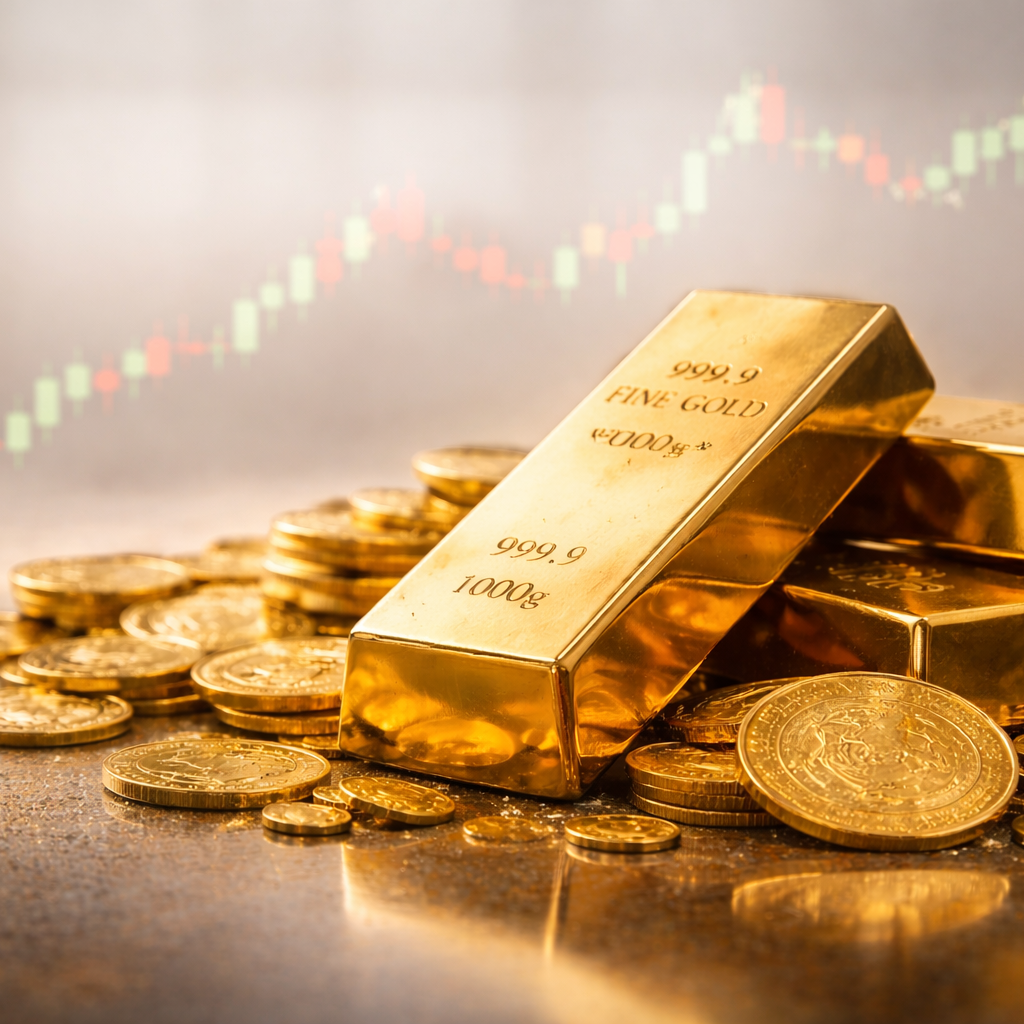
Gold prices experienced sharp fluctuations in global markets as rising geopolitical tensions in the Middle East and a stronger US dollar created uncertainty among investors. The precious metal, often seen as a safe-haven asset during times of crisis, moved up and down rapidly as traders reacted to both political developments and economic signals.
Financial markets have become increasingly volatile following the escalation of conflict involving the United States, Israel, and Iran. The situation has raised fears of a wider regional war, pushing investors to reconsider their strategies and move money between assets such as currencies, commodities, and equities. As a result, gold prices have been swinging significantly in recent trading sessions.
Gold traditionally benefits during periods of instability because investors consider it a reliable store of value when financial markets become unpredictable. However, the metal’s price has not followed a simple upward trend. Instead, it has shown strong volatility due to competing forces affecting the global economy.
One of the main factors putting pressure on gold prices is the strength of the US dollar. When the dollar rises, gold becomes more expensive for investors who hold other currencies, which can reduce demand and push prices lower. Analysts say the recent strengthening of the dollar has partly offset the safe-haven demand for gold created by geopolitical tensions.
The ongoing conflict in the Middle East has played a major role in shaping market sentiment. Military actions and retaliatory strikes in the region have increased fears about the stability of global energy supplies and international trade routes. These concerns have caused sharp movements in several markets, including oil, currencies, stocks, and precious metals.
When tensions escalate, investors often shift funds toward assets perceived as safer. Gold is typically one of the biggest beneficiaries of such movements. However, market experts say that at times investors also move into cash or US dollar assets, which can weaken gold’s rally.
Recent trading sessions have demonstrated this tug-of-war between safe-haven demand and currency strength. Gold prices initially climbed as fears of a broader conflict spread across financial markets. Investors rushed to buy the metal to protect their wealth from potential economic shocks and rising uncertainty.
However, the rally slowed as the US dollar gained momentum. Rising Treasury yields and expectations surrounding US monetary policy also influenced market sentiment. When interest rates or bond yields increase, gold can lose some of its appeal because it does not provide regular income like interest-bearing investments.
Market analysts say inflation concerns are another important factor affecting gold prices. The conflict in the Middle East has already caused a surge in energy prices, particularly oil and gas. Higher energy costs can increase global inflation and complicate decisions by central banks about interest rates and monetary policy.
The war-related disruptions have also contributed to instability in global supply chains and shipping routes, especially around critical areas such as the Strait of Hormuz. This region is responsible for transporting a large share of the world’s oil supply, and any disruption there can influence global economic conditions.
Because of these uncertainties, gold markets have been reacting quickly to each new development related to the conflict. Traders and investors are closely watching military updates, diplomatic statements, and economic data for clues about where prices might move next.
Despite the short-term volatility, many analysts believe that the broader outlook for gold remains positive. Geopolitical tensions, economic uncertainty, and continued demand from investors and central banks could support the metal over the longer term. Some experts argue that gold will continue to play a crucial role in investment portfolios as a hedge against inflation and financial instability.
At the same time, the strength of the US dollar and expectations about interest rate policies may continue to create price swings in the near future. Investors are therefore likely to see further volatility in gold markets as global events unfold.
Overall, the current situation highlights how closely linked financial markets are to geopolitical developments. Gold’s sharp movements reflect the complex balance between fear-driven demand and economic pressures such as currency strength and interest rates.
As long as tensions in the Middle East remain unresolved and global economic uncertainties persist, gold prices are expected to remain highly sensitive to both political news and economic data. For investors, this means staying alert to rapidly changing market conditions while considering gold’s traditional role as a safe-haven asset during periods of crisis.
Source: Khaleej Times